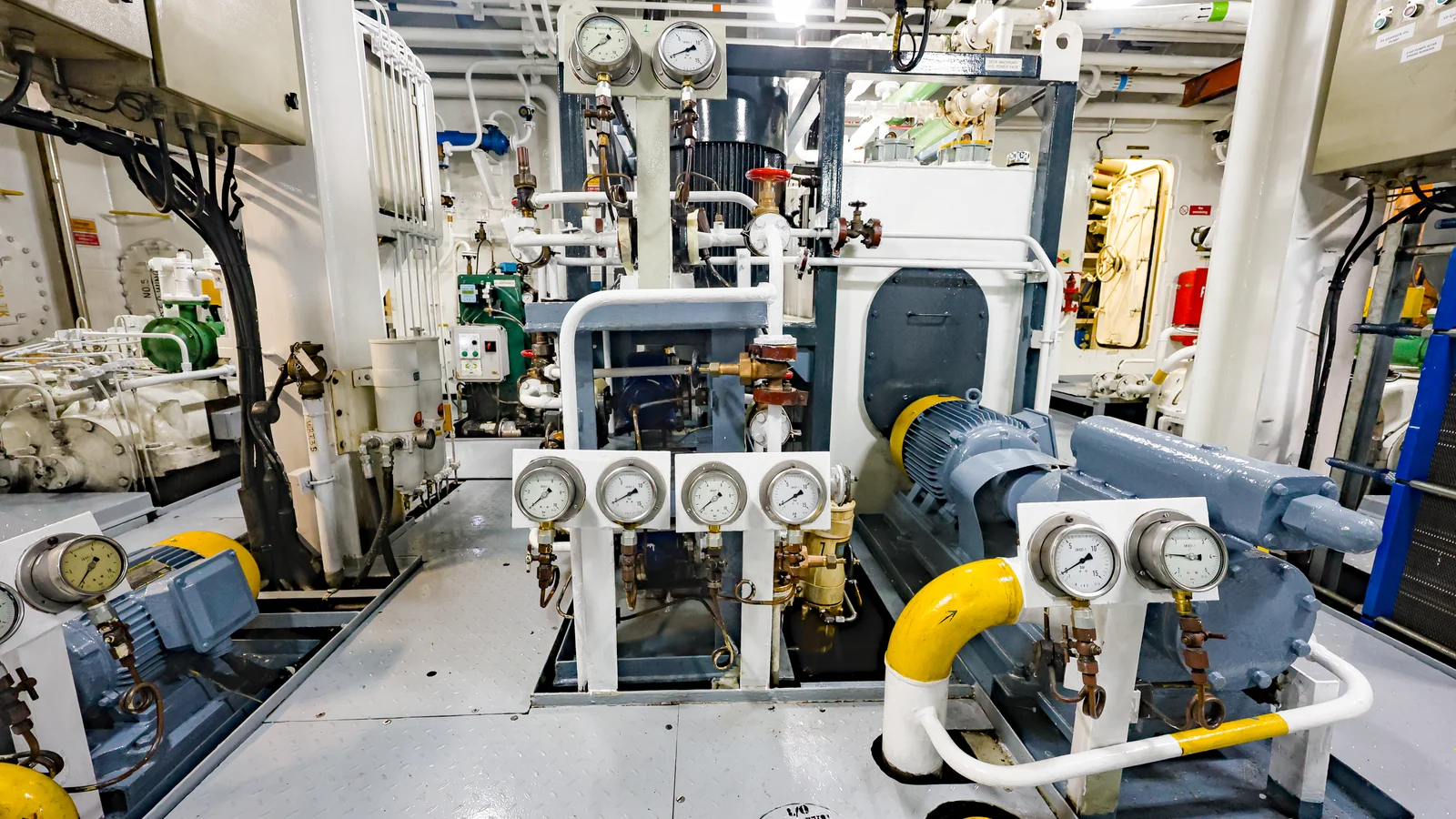
Engine-room systems
Main and auxiliary engine parts, turbocharger components, pumps, compressors, separators, filters, heat exchangers and sealing items. Requests here turn on the plate and the position: which engine, which cylinder or bank the component came off, and whether a word like exhaust valve or piston means one item or a complete assembly. Running gear, fuel injection and turbocharging each have their own identity rules, and the guides cover them one system at a time.
Fluid and process equipment
Pumps, valves, pipe-system components, filters, gaskets, seals, gauges and process instrumentation. What decides a line in this group is the duty rather than the model name: the same pump casing is built with different impeller materials, seal faces and clearances for sea water, fresh water, fuel or bilge service, and a valve is specified by line size, pressure rating and the medium it passes as much as by its maker.
Instrumentation and safety
Gas detection equipment, thermometers, transmitters, sensors, control components and evidence-led replacement requests. Certification is part of the item here rather than paperwork that follows it: a detector approved for a fixed installation is approved with the sensor it was type-tested with, and a request has to name the target gas and the measuring range alongside the instrument before a cell can be identified at all.
Electrical and automation
Marine electrical, automation and navigation-related equipment references where a correct technical identity can be established. Two components with the same rating are routinely not interchangeable on this side of the vessel — a contactor differs by coil voltage, a voltage regulator by sensing mode, a breaker by the trip unit and the settings the switchboard was coordinated to — so an electrical line is answered from the nameplate and the installation together.
HVAC and environmental systems
Refrigeration, ventilation, BWTS and environmental-system requirements with maker and system context. These systems are usually assembled from several makers under one system name, so the component plate matters more than the package plate: the compressor, the controller, the valves and the treatment unit each carry their own identity, and a request written against the system rather than the component is the most common reason one of these lines needs a second round.
Deck, steering and service items
Deck, steering, mechanical and service-kit requirements supported by references, drawings or photos. Much of this equipment predates any electronic parts record on board, so a photographed drawing position, a page from the original manual or an old order line is often the strongest evidence available — and it is usually enough to begin.