
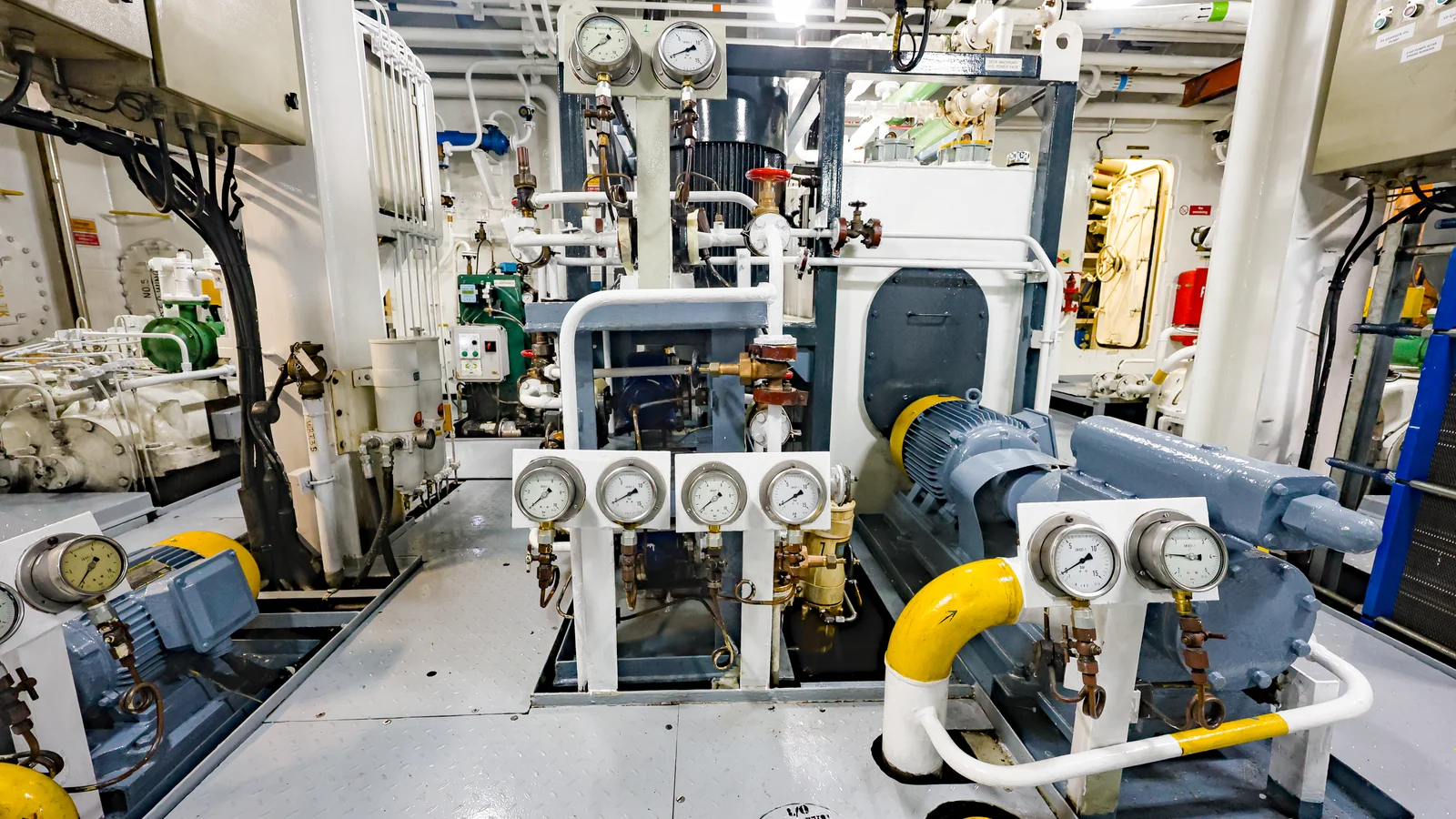
The part reference is cross-checked against maker, model and serial context first.
Buyer trust & route clarity
Parts Authenticity
Parts Authenticity
and Supply Route Transparency
How OEM-route and verified-alternative supply can be reviewed, stated per quotation line and documented before the buyer commits.
OEM route or verified alternative route is reviewed per requirement, not by default.
The quotation can state which route is proposed, so the buyer decides with open eyes.
Traceability documents can be requested where available and confirmed at quotation stage.
Stated routeOEM or verified alternative, named per line
Independent supplierNo authorized-distributor claims
Verification reviewPart identification, supplier vetting, documents
Docs on requestManufacturer, material and test certificates where available
Authenticity as a supply question
Authenticity is a route question before it is a product question.
For marine spare parts, the practical authenticity question is rarely answered by a logo on a box. It is answered by knowing which supply route the part travelled. An OEM supply route sources the part through the equipment maker's own commercial chain. A verified alternative route sources it from a vetted manufacturer or supplier outside that chain. Both can be legitimate answers to the same requirement; they differ in approval logic, documentation and price, and a technical buyer weighs those differences per part, not per slogan.
Vessel Core is an independent supplier and does not present itself as an authorized distributor or dealer. That position is stated openly because it defines what honest authenticity language looks like: instead of blanket claims, the quotation can state which route is proposed for each line, and traceability documents can be requested where available. Stated route transparency gives a purchasing record something checkable; authenticity marketing gives it an adjective.
Verification review
What the verification review looks at before a route is proposed.
Each element below can be reviewed within the structured RFQ, so route selection rests on evidence rather than on assurances.
Part identification
The part reference is checked against maker, model and serial context so the route review starts from the correct component rather than a lookalike listing.
OEM supply route
Sourcing through the equipment maker's own commercial chain. Typically weighed where approval needs or equipment criticality argue for it; reviewed per requirement.
Verified alternative route
Sourcing from a vetted manufacturer or supplier outside the maker's chain. Proposed openly as an alternative and never presented as OEM supply.
Supplier vetting
Sources on the alternative route are reviewed before quoting: who manufactures or holds the part, and what evidence supports that answer.
Serial and application context
The same part reference can differ across equipment variants, so the serial context and the application on board are read together with the number.
Documentation availability
Whether manufacturer certificates or material and test certificates can accompany the part is checked before commitment, with availability confirmed at quotation or invoice stage.
Route stated at quotation
The proposed route can be stated per quotation line, so a mixed offer with some lines on the OEM route and some on a verified alternative stays legible.
Independent supplier position
Vessel Core does not claim authorized-distributor status. Route and documentation transparency is offered in place of authenticity marketing.
Buyer checklist
Questions a technical buyer can put to any quotation.
These questions work on any supplier's offer, not only this one. A quotation that answers them in writing is easier to defend in a purchasing record than one that leans on authenticity wording, and asking them early keeps the route review inside the RFQ instead of after delivery.
Route clarity
- Route stated per quotation line
- OEM route or verified alternative named
- Both routes quoted where useful
- Route changes flagged in writing
Identification basis
- Maker and model confirmed
- Serial context reviewed
- Part reference cross-checked
- Application on board noted
Documentation
- Manufacturer certificate where available
- Material certificate where available
- Test certificate where available
- Availability confirmed at quotation stage
Decision context
- Equipment criticality
- Approval requirements
- Lead time against vessel schedule
- Budget logic per route
Related pages
Continue the buying review.
Authenticity FAQ
Short answers on routes and traceability.
How can a buyer know which supply route is being proposed?
The quotation can state the proposed route per line: OEM supply route or verified alternative route. If the route is not stated, the buyer can ask for it before committing. A structured RFQ makes that question part of the normal review rather than an afterthought.
What traceability documents can be requested with marine spare parts?
Manufacturer certificates and material and test certificates can be requested where available. Availability differs by part and by route, so the practical approach is to name the documentation need in the RFQ and have it confirmed at quotation or invoice stage.
Is Vessel Core an authorized distributor for the equipment makers it quotes against?
No. Vessel Core is an independent supplier and does not present itself as an authorized distributor or dealer. Instead of blanket authenticity claims, the proposed supply route can be stated on the quotation and supporting documents can be requested where available.
Ask about the route
Want the supply route stated on your next quotation?
Send maker, model, serial context and the part reference, and say whether the OEM route, a verified alternative route or both should be reviewed. Documentation needs can be named in the same RFQ and confirmed at quotation stage.

