
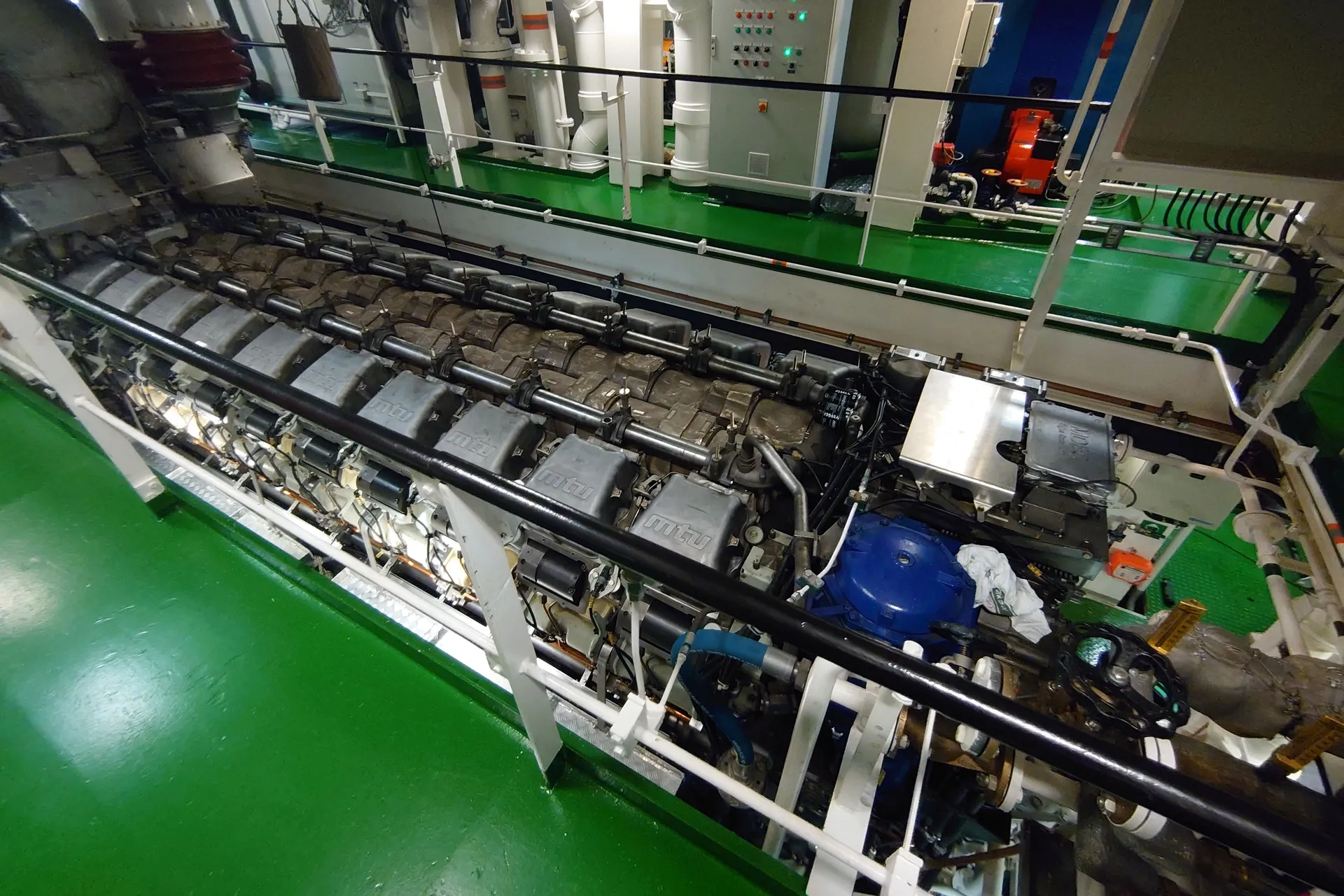
Maker, model, serial, photos, nameplates, drawings, quantity, port and ETA.
Engines & Major Components
Marine Engine
Marine Engine
Spare Parts Supplier
Engine-room spare parts supply for main and auxiliary engine spares, overhaul items and time-critical RFQs.
Request context is structured before supplier routing or quotation work.
OEM route or verified alternative route can be reviewed where appropriate.
Commercial request is prepared for clearer supplier review and buyer reply.
Main and auxiliaryEngine spares and overhaul items
OEM + verified alternativesRoute review by criticality and approval context
Technical cross-checkingMaker, model, serial, part book and photos
Port-aware deliveryTime-critical RFQ and port/ETA coordination
Engine spare parts supplier
Engine RFQs handled around maker, model, serial number and vessel schedule.
Vessel Core supplies shipowners, managers, superintendents, purchasing departments, repair yards and maritime agents with marine main and auxiliary engine spare parts.
The request can begin from complete part numbers, engine data plates, part book pages, drawings, photos or an Excel list. We structure the RFQ for technical matching, OEM and verified alternative route review, and port-aware commercial follow-up.
Supply scope
Engine spare parts and overhaul items we can structure into an RFQ.
Coverage for planned maintenance, overhaul supply and time-critical engine-room spare parts requests.
Cylinder liners
Cylinder liners, liner seals and related replacement components.
Pistons
Piston crowns, skirts, assemblies and associated engine components.
Piston rings
Piston ring sets, wear items and overhaul-related ring components.
Fuel injectors
Fuel injectors, nozzles, pumps and injection-system spare parts.
Bearings
Main bearings, crankpin bearings, thrust bearings and related engine items.
Valves
Exhaust valves, inlet valves, seats, spindles, cages and actuator-related items.
Gaskets and seals
Gasket sets, O-rings, sealing kits and overhaul consumables.
Filters and overhaul kits
Oil/fuel filters, service kits and grouped overhaul item lists.
By engine duty
Main engine spare parts
On a slow-speed main engine a request is tied to a cylinder unit and a build, not to the engine as a whole.
- Cylinder liners, liner seals and anti-cavitation rings
- Piston crowns, skirts, rings and piston rod stuffing box parts
- Exhaust valve spindles, seats, cages and actuator components
- Fuel valves, injection pump elements, plungers and delivery valves
- Crosshead, crankpin and main bearing shells
- Cylinder cover studs, nuts and complete overhaul gasket sets
Overhaul intervals are counted in running hours per unit, so quantities usually arrive as unit sets rather than singles, and the unit number belongs in the request beside the part reference. The Mark number and the build data are what settle a part number when the same designation covers several generations. Access matters too: what can be reached with the engine in place decides the order of the work, and that changes timing more than the part itself does.
By engine duty
Auxiliary engine spare parts
Auxiliaries are medium- or high-speed four-strokes, usually several identical sets, and the request pattern is different.
- Complete cylinder heads and head components rather than parts of one unit
- Injectors, nozzles and injection pump elements exchanged as assemblies
- Turbocharger cartridges, nozzle rings and shaft seal kits
- Inlet and exhaust valves, seats, guides, rocker gear and pushrods
- Main and connecting rod bearing shells by shell size and undersize
- Jacket-water and lube oil pump service kits, thermostat and cooler seals
Because the sets are identical, a quantity is usually multiplied across engines — a valve kit for one auxiliary is rarely a valve kit for one auxiliary. The engine number stencilled on the frame identifies which set the request came from, and the serial number identifies the build; a cylinder position matters far less here than it does on the main engine. Where an auxiliary drives a generator, the alternator side is a separate supply question and is treated as one.
Model index
58 models in this category, filterable.
Start typing a designation, a maker or a part and the rows filter as you go. The full list across the whole site lives on the maker reference page. Full index across every category and maker.
58 models
| Model | Series | Maker | Typical parts |
|---|---|---|---|
| CAT 3508 | CAT 3500 Series | Caterpillar | 8-cylinder V-form diesel, auxiliary and propulsion. Cylinder liner sets, piston assemblies, injector tips, turbocharger cartridges, gasket kits. |
| CAT 3512 | CAT 3500 Series | Caterpillar | CAT 3512 RFQs can include piston rings, cylinder head gaskets, injector assemblies, water pump seals and valve sets. Confirm the complete engine identity and arrangement. |
| CAT 3606 · 3608 | CAT 3600 Series | Caterpillar | Large-bore medium-speed main propulsion engines. Cylinder heads, piston crowns, exhaust valve assemblies, camshaft components, crankshaft bearing shells. |
| CAT 3612 · 3616 | CAT 3600 Series | Caterpillar | High-power V-form main engines for large vessels. Fuel injection pumps, cylinder liner kits, charge air cooler elements, governor components, overhaul seal sets. |
| CAT C18 | CAT C-Series | Caterpillar | Compact in-line six-cylinder diesel for auxiliary and propulsion. Cylinder head kits, injector assemblies, timing components, cooling circuit seals, gasket sets. |
| CAT C32 | CAT C-Series | Caterpillar | High-speed marine diesel for fast craft and workboats. Injectors, turbocharger units, piston ring sets, water pump assemblies, heat exchanger elements. |
| MaK M 20 · M 25 · M 32 | MaK (Caterpillar group) | Caterpillar | MaK medium-speed engines built by Caterpillar Motoren in Kiel. Cylinder heads, liners, fuel injection equipment, turbocharger components and overhaul gasket kits — reviewed against the engine evidence supplied with the RFQ. |
| KTA19 | Cummins K-Series | Cummins | KTA19 RFQs can include pistons, liners, cylinder heads, injectors, turbocharger components and gasket sets. Confirm the complete engine identity and installed configuration. |
| KTA38 | Cummins K-Series | Cummins | 38-litre V12 high-output marine diesel. Anchor handling tugs and platform supply vessels. Crankshaft bearings, connecting rods, exhaust valves, fuel pump assemblies. |
| KTA50 | Cummins K-Series | Cummins | 50-litre V16 top-output K-series engine. Heavy anchor handlers and large OSVs. Cylinder liners, piston ring sets, turbocharger cartridges, intercooler cores, overhaul kits. |
| QSB6.7 | Cummins QSB Series | Cummins | QSB6.7 RFQs can include piston rings, injector nozzles, turbocharger components, gasket sets and cooling-system parts. Confirm model, serial and application evidence. |
| QSK19 | Cummins QSK Quantum | Cummins | Quantum series 19-litre with advanced fuel management. Cylinder heads, injector cups, valve seat inserts, camshaft followers, lube oil system components. |
| QSK38 | Cummins QSK Quantum | Cummins | QSK 38-litre V12 Quantum high-power engine. Piston assemblies, exhaust valve rotators, fuel injectors, turbocharger nozzle rings, cooling system spares. |
| QSK60 | Cummins QSK Quantum | Cummins | 60-litre top-tier Quantum engine for high-power commercial vessels. Main bearings, piston crowns, cylinder liner sets, complete head assemblies, full overhaul kits. |
| QSM11 | Cummins QSM Series | Cummins | QSM11 RFQs can include injectors, cylinder head gaskets, water pump assemblies, intercooler elements and seal kits. Confirm model, serial and application evidence. |
| DK-20e | Daihatsu DK Series | Daihatsu | DK-20e RFQs can include pistons, liners, cylinder heads, fuel pumps and injection valves. Confirm model suffix, serial/build and generator-set evidence. |
| DK-26 | Daihatsu DK Series | Daihatsu | DK-26 RFQs can include cylinder liners, piston rings, exhaust valve assemblies, turbocharger nozzle rings and bearing shells. Confirm model suffix and serial/build evidence. |
| DK-28 | Daihatsu DK Series | Daihatsu | DK-28 RFQs can include pistons, connecting rods, crankshaft bearings, fuel injection equipment and gasket sets. Confirm configuration, serial/build and part evidence. |
| DKM-36 | Daihatsu DKM Series | Daihatsu | DKM-36 RFQs can include pistons, cylinder liners, exhaust valves, turbocharger parts and camshaft drives. Confirm installed duty, serial/build and part evidence. |
| DL-22 | Daihatsu DL Series | Daihatsu | DL-22 RFQs can include cylinder heads, valve seat inserts, governor components, cooling-system spares and overhaul kits. Confirm serial/build and part evidence. |
| DL-26 | Daihatsu DL Series | Daihatsu | DL-26 RFQs can include fuel injection pumps and plungers, turbocharger interface parts, piston crowns and cylinder head gaskets. Confirm installed duty and build evidence. |
| DS-26 | Daihatsu DS Series | Daihatsu | DS-26 RFQs can include liners, valves and injection equipment. Confirm the complete model suffix, installed duty, serial/build and approved overhaul scope. |
| D2866 · D2876 | MAN High-speed | MAN / MAN B&W | High-speed marine diesels for fast craft and service vessels. Pistons, liners, injectors, turbocharger units, water pump assemblies. |
| G80ME-C / S90ME-C | MAN B&W ME-C Series | MAN / MAN B&W | Electronically controlled 2-stroke engines. HCU components, exhaust valve actuators, Alpha lubricators, cylinder liner kits. |
| L16/24 | MAN Four-stroke | MAN / MAN B&W | Compact auxiliary diesel. Piston rings, cylinder liners, fuel injection pumps, intercooler elements, crankshaft bearing shells. |
| L27/38 · V28/32S | MAN Four-stroke · L/V | MAN / MAN B&W | In-line and V-form medium-speed engines for genset and propulsion duty. Cylinder liner sets, fuel injection equipment, valve-drive components, cooling circuit overhaul kits. |
| L28/32 · L23/30 | MAN Four-stroke | MAN / MAN B&W | Medium-speed auxiliary engines. Cylinder heads, connecting rod bearings, injection nozzles, turbocharger cartridges, gasket sets. |
| M20 · M25 · M32 · M43 | MaK Medium-speed | MAN / MAN B&W | MaK in-line and V-type diesels. Cylinder heads, valve seat inserts, injection equipment, governor parts, cooling system spares. |
| S70MC / S80MC | MAN B&W Two-stroke | MAN / MAN B&W | Large-bore slow-speed main engines. Cylinder liners, piston rings, stuffing box seals, turbocharger nozzle rings, camshaft drives. |
| S6R-MPTK | Mitsubishi S-series 4-stroke | Mitsubishi | S6R-MPTK RFQs can include cylinder-liner kits, valve seat inserts, fuel injection pumps, governor parts and gasket sets. Confirm serial/build and generator-set evidence. |
| S6U-MPTK | Mitsubishi S-series 4-stroke | Mitsubishi | S6U-MPTK RFQs can include cylinder heads, piston kits, connecting rod bearings, injection nozzles, turbocharger parts and cooling-system spares. Confirm serial/build and generator-set evidence. |
| UEC33LSE | Mitsubishi UEC 2-stroke | Mitsubishi | UEC33LSE RFQs can include cylinder liners, pistons, exhaust valves and fuel injection pumps. Confirm serial/build, installed configuration and part evidence. |
| UEC37LA | Mitsubishi UEC 2-stroke | Mitsubishi | UEC37LA RFQs can include piston rings, cylinder heads, turbocharger nozzle rings, stuffing-box seals and crosshead bearings. Confirm build evidence. |
| UEC45LA | Mitsubishi UEC 2-stroke | Mitsubishi | UEC45LA RFQs can include liners, piston crowns, exhaust valves, fuel injection equipment and camshaft-drive components. Confirm the approved overhaul scope and build evidence. |
| UEC50LSE | Mitsubishi UEC 2-stroke | Mitsubishi | UEC50LSE RFQs can include cylinder-liner kits, piston assemblies, exhaust valve spindles and seats, turbocharger cartridges and connecting-rod bearings. |
| UEC52LA | Mitsubishi UEC 2-stroke | Mitsubishi | UEC52LA RFQs can include main bearings, crankpin shells, cylinder heads, fuel injection pumps and plungers, and governor components. Confirm build evidence. |
| UEC60LS | Mitsubishi UEC 2-stroke | Mitsubishi | UEC60LS RFQs can include pistons, liners, exhaust valves, turbocharger interface parts, stuffing-box seals and overhaul gasket kits. Confirm build evidence. |
| 8V 2000 M70/M72 | MTU Series 2000 | MTU | Compact 8-cylinder Series 2000 for fast craft and service vessels. Cylinder heads, fuel injectors, pistons, cooling system parts, electronic control modules. |
| 12V / 16V 2000 M70/M72/M86/M93 | MTU Series 2000 | MTU | Mid and large Series 2000 configurations. Injection nozzles, cylinder liners, turbocharger cartridges, fuel pump assemblies, gasket and seal kits. |
| 12V 4000 M70/M73/M90 | MTU Series 4000 | MTU | High-power 12-cylinder Series 4000. Injectors, cylinder heads, piston and liner kits, turbocharger components, fuel system parts, ECS control units. |
| 16V 4000 M90/M93 | MTU Series 4000 | MTU | 16-cylinder high-speed marine engine. Cylinder heads, pistons, liners, common rail fuel system components, cooling circuit parts, bearing shells. |
| 20V 4000 M90/M93 | MTU Series 4000 | MTU | 20V 4000 M90/M93 RFQs can include injectors, cylinder heads, turbocharger assemblies, piston and liner kits, fuel-system and electronic-control spares. |
| BR 4000 C (Rolls-Royce era) | MTU BR 4000 C | MTU | BR 4000 C series covering Rolls-Royce Power Systems-era production. Cylinder heads, injectors, pistons, liners, turbocharger cartridges, electronic control. |
| Series 396 | MTU Series 396 | MTU | Series 396 RFQs can include injectors, cylinder heads, pistons, liners and turbocharger components. Confirm the complete model and serial/build evidence. |
| Series 8000 | MTU Series 8000 | MTU | Large-displacement high-speed marine diesel. Injector assemblies, cylinder heads, turbocharger components, fuel system, cooling system, ECU parts. |
| Sulzer RTA Series | Sulzer Two-stroke | Wärtsilä | Legacy slow-speed main engines — RTA48T, RTA52U, RTA58T, RTA72U. Cylinder liners, piston rings, fuel pumps, exhaust valves, crosshead parts. |
| Wärtsilä 20 | Wärtsilä Medium-speed | Wärtsilä | Compact in-line auxiliary engine. Cylinder heads, piston rings, injection nozzles, camshaft bearings, turbocharger cartridges. |
| Wärtsilä 26 | Wärtsilä Medium-speed | Wärtsilä | Auxiliary and propulsion diesel. Cylinder liners, exhaust valve assemblies, fuel pumps, crankshaft bearing shells, gasket sets. |
| Wärtsilä 34DF | Wärtsilä Dual-fuel | Wärtsilä | Dual-fuel medium-speed engine. Standard mechanical parts — pistons, liners, cylinder heads, injection pumps — sourced on request. |
| Wärtsilä 50DF | Wärtsilä Dual-fuel | Wärtsilä | Large-bore dual-fuel main engine. Cylinder kits, fuel injection components, exhaust system parts, cooling circuit spares. |
| ZA40S | Sulzer / Wärtsilä | Wärtsilä | Medium-speed auxiliary and propulsion engine. Cylinder heads, fuel injection pumps, valve timing components, turbocharger parts, gasket sets. |
| 6AYL-ET | Yanmar AYL Series | Yanmar | 6AYL-ET RFQs can include cylinder heads, valve assemblies, injection pumps, heat-exchanger elements and mounting seals. Confirm the installed governor and build evidence. |
| 6AYL-HT | Yanmar AYL Series | Yanmar | 6AYL-HT RFQs can include piston rings, liner O-rings, crankshaft bearings, connecting-rod fasteners and lube-oil-system components. Confirm installed configuration. |
| 6EY22 | Yanmar EY Series | Yanmar | 6EY22 RFQs can include pistons, exhaust valves, fuel pumps, turbocharger components, governor and speed-control parts. Confirm serial/build and part evidence. |
| 6HAL-DT | Yanmar HAL Series | Yanmar | Direct turbocharged HAL auxiliary. Compact high-speed configuration. Piston ring sets, liner kits, injector nozzles, gasket sets, water pump assemblies. |
| 6MAL-HT | Yanmar MAL Series | Yanmar | 6MAL-HT RFQs can include cylinder head assemblies, valve seat inserts, injection equipment, turbocharger interface parts and overhaul kits. Confirm serial/build evidence. |
| 6N18 | Yanmar N Series | Yanmar | 6N18 RFQs can include cylinder liners, piston crowns, exhaust valve seats, fuel injectors, intercooler elements and overhaul kits. Confirm serial/build evidence. |
| 6N21 | Yanmar N Series | Yanmar | 6N21 RFQs can include cylinder heads, main bearings, camshaft-drive parts, fuel injection pumps and turbocharger cartridges. Confirm serial/build evidence. |
Nothing matches. Send the designation from the nameplate — we also quote items that are not listed here.
This list indicates coverage. It is not stock on hand and not a claim of affiliation with any manufacturer.
In the field
Where these requests actually come from.
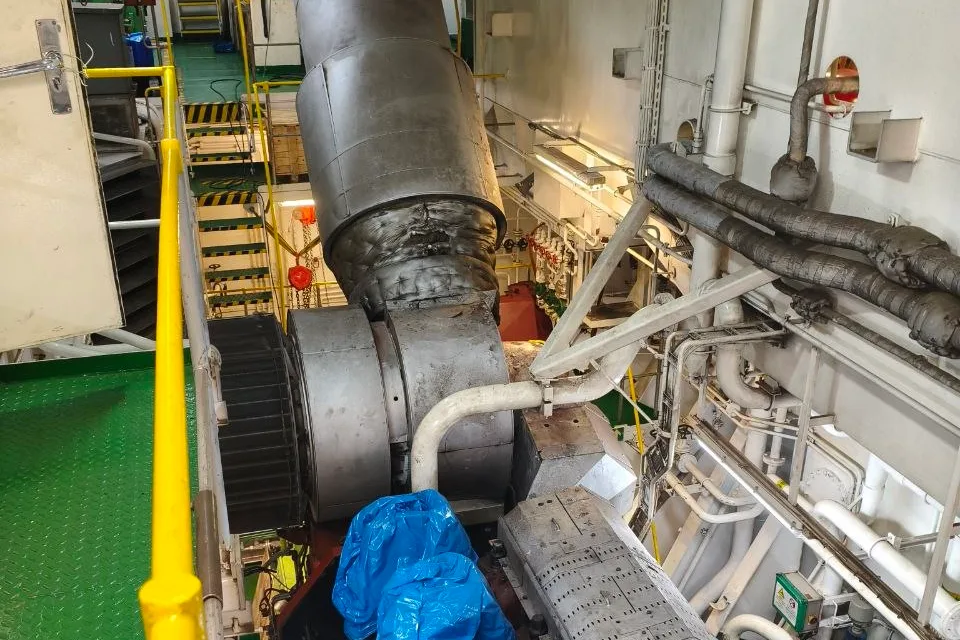
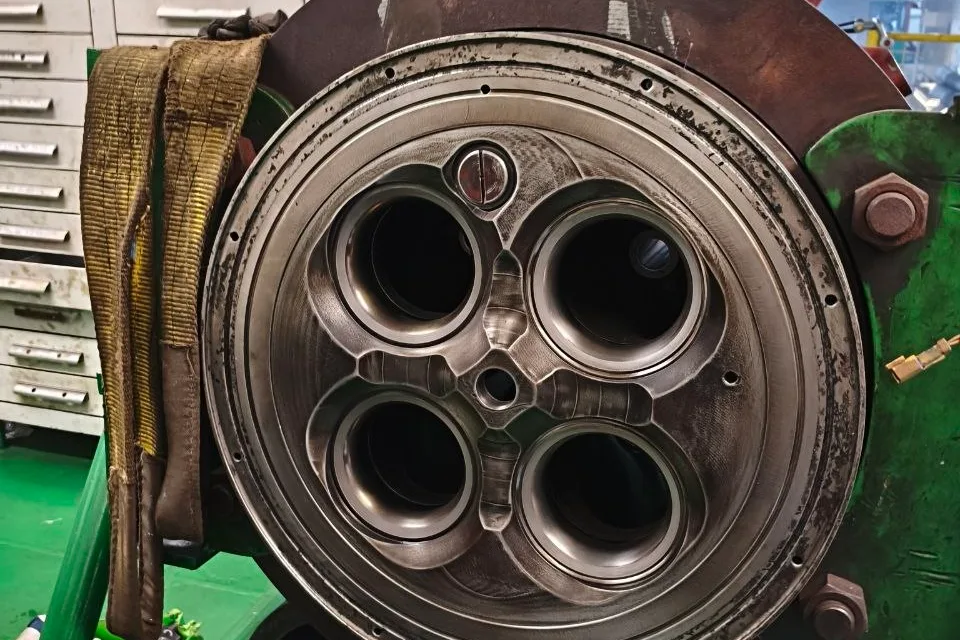
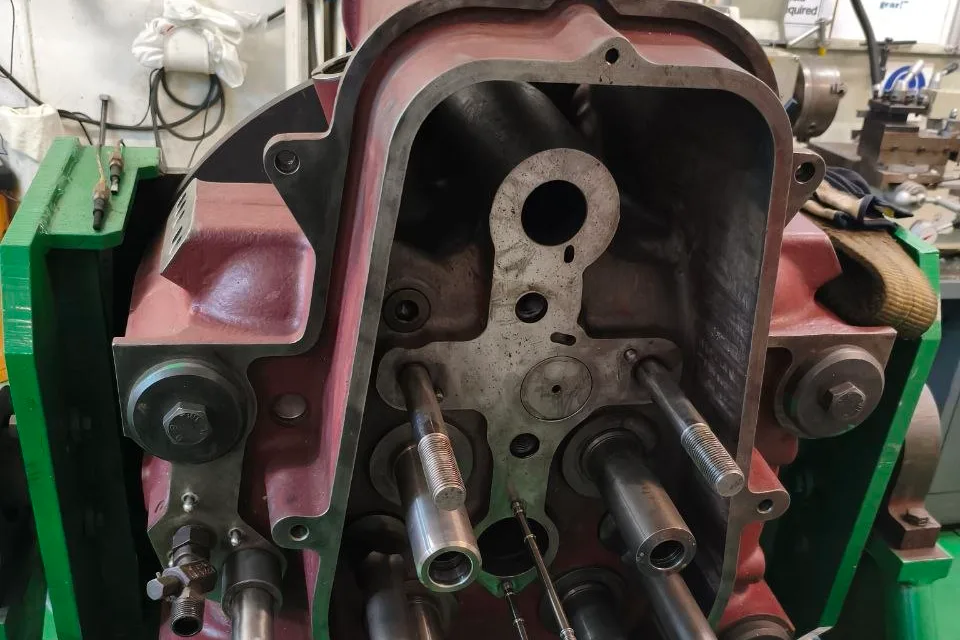
Photographed by Vessel Core aboard a vessel during a yard visit in September 2026 and published with the owner's permission. The images show the working conditions these requests come from. They are not a claim that Vessel Core supplied the parts shown or carried out the overhaul.
Engine supply route
Turn engine data into a clear supply route.
For engine spare parts, the commercial decision depends on more than a part number. Vessel Core keeps technical identity, vessel timing, approval context and supply route preference in one RFQ workflow.
This helps purchasing teams compare OEM and verified alternative routes while keeping the superintendent, repair yard or vessel agent aligned around the same engine data.
Engine and component identity
Maker, model, serial number, part-book position, drawing or photo evidence are matched into one technical request.
Criticality and vessel timing
Planned maintenance, repair-yard schedule or time-critical operating context changes the RFQ route and response priority.
OEM and verified alternatives
Where suitable, OEM and verified alternative options can be reviewed by approval need, lead time and commercial logic.
Port, ETA and delivery context
Port, ETA, company contact and agent or yard details keep the quotation aligned with the vessel schedule.
What to send
Send enough context to identify the engine, part-book position and urgency.
Engine part numbers are helpful, but serial number, nameplate photos, part-book pages, drawings and old component photos can be enough to begin technical cross-checking.
Vessel and timing
- Vessel name / IMO
- Company name
- Urgency level
- Port / ETA
Equipment reference
- Maker
- Model
- Serial number
- Equipment application
Part request
- Part number
- Description
- Quantity
- OEM / alternative / both
Attachments
- Photos
- Nameplate
- Drawing
- Excel list
Related categories
Connect this RFQ to the wider engine-room supply scope.
Engine RFQ FAQ
Short answers for technical buyers.
Can you quote engine parts without a part number?
Yes. Send engine maker/model, serial number, part-book page, drawing, nameplate photo or old component photos so the request can be structured.
How are time-critical engine RFQs reviewed?
Add vessel / IMO, urgency, port, ETA and operational impact so the RFQ can be reviewed around timing and supply route.
Can Vessel Core review OEM-route and verified alternative supply?
Yes. OEM-route and verified alternative supply routes can be reviewed by technical criticality, approval requirements, lead time and commercial logic.
Send engine RFQ
Need marine engine spare parts?
Send engine maker, model, serial number, part number or part-book page, quantity and port/ETA. Photos, drawings, nameplates or Excel lists are welcome.

