
Riken Keiki Marine Gas Detection
Spare Parts Supplier
Portable GX & RX instruments · fixed SD and SC detection · sensor cells and calibration items
The Riken Keiki instruments behind most gas detection enquiries
Riken Keiki is a Japanese manufacturer of gas detection instruments with a marine product line, and that line reaches a ship in two quite different forms: portable instruments carried by the crew, and fixed detection wired into the vessel's own alarm arrangement. One vessel commonly holds several at once - a compact instrument for enclosed-space entry testing, a larger portable for tanker work, and fixed heads covering spaces nobody enters routinely. Riken Keiki states ATEX, MED, ABS, DNV, KR and RINA approvals for its marine line, and frames the GX-9000 and the GX-3R Pro around compliance with IMO MSC.581(110) for atmosphere testing before enclosed-space entry. The model name alone rarely settles a parts question, because the same body is built with different sensor fits.
GX-3R and GX-3R Pro - compact personal instruments
Small enough to be worn rather than carried. The Pro can be configured for as many as five gases, combining LEL, oxygen, hydrogen sulphide and carbon monoxide with a toxic option such as HCN, NH3, NO2, PH3, SO2 or CO2, which is why two instruments with the same name on the case can need entirely different cells.
Multi-gas and VOC portables
The GX-6000 covers as many as six gases including volatile organic compounds, which brings a different sensor family into the same instrument. The GX-Force is a four-gas instrument. Both are ordered by the gases actually fitted rather than by the maximum the body will accept.
GX-9000 and GX-9000H - expandable four to six gas
Leaves the works with the four standard gases O2, H2S, CO and HC and two further sensor slots that may or may not have been filled on board. The GX-9000H is a high-range hydrogen sulphide variant aimed at oil tankers, so the range, not only the gas, has to be stated when a cell is requested.
RX-8500 - LNG cargo monitoring
Built for LNG carrier cargo monitoring with an infrared methane sensor covering 0-100% LEL and 0-100% by volume with autoranging. An infrared sensor is a different part from the catalytic element used elsewhere for combustibles, and is treated as its own line on an enquiry.
SD-1 - smart transmitter and detector head
A fixed head with an integrated display, measuring combustibles such as methane and hydrocarbons alongside toxic hydrogen sulphide and carbon monoxide. Because the head carries its own display and smart sensor, the sensor and the transmitter are separable items on a parts list.
SC-01 - single toxic-gas monitor
Built around interchangeable smart sensors that the monitor recognises automatically, so changing the target gas does not call for reconfiguration. That design turns the sensor into a routine consumable, and makes the target gas and range the decisive fields on the RFQ line rather than the monitor type.
SD-3 - fixed marine detection system
Installed for engine rooms, pump rooms, bilge areas, ballast tanks and accommodation spaces. A system enquiry usually reaches a supplier as a list of heads, sensors and calibration items for several spaces at once rather than as a single part.
Riken Keiki components that appear on RFQ lines
Most of what actually reaches a supplier for this equipment class is consumable rather than instrument. The groups below follow the order in which the parts are handled on board - the sensing element first, then the sampling path that feeds it, then power, then everything needed to prove the reading is still true.
- Replacement electrochemical sensor cells for toxic gases
- Oxygen sensor cells
- Catalytic sensing elements for combustible gas
- Infrared sensor units for methane and hydrocarbons
- Interchangeable smart sensors for SC-01 monitors and SD-1 heads
- Sampling pump units for pumped instruments
- Dust and water intake filters
- Sampling hoses and probes
- Battery packs
- Chargers and charging docking stations
- Calibration docking stations
- Calibration gas cylinders - span gas
- Zero air cylinders
- Calibration adapters
- Rubber boots and body covers
- O-rings and gaskets for sensor and case sealing
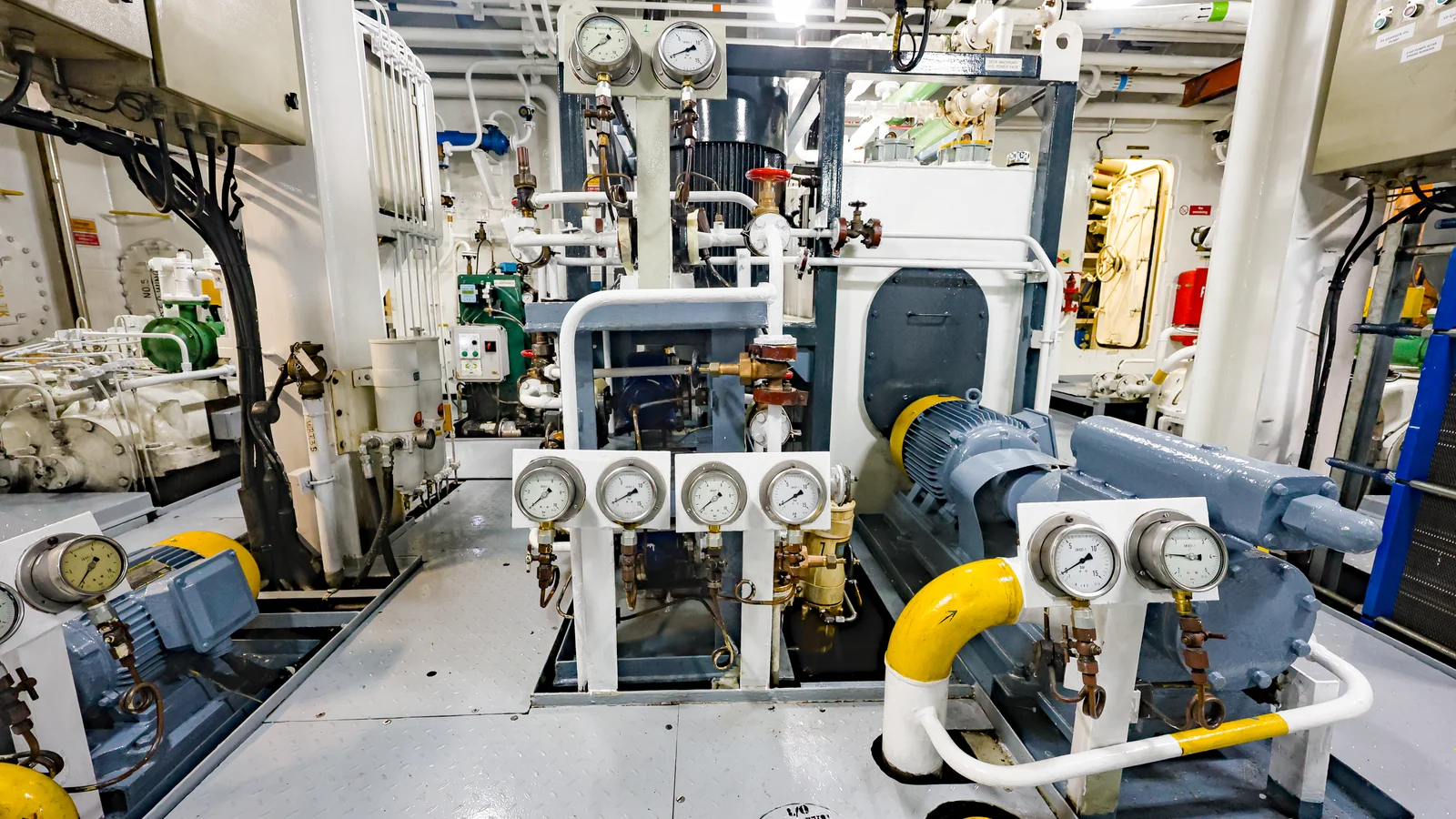
Portable gas detector — general arrangement
A licensed photograph of Riken Keiki equipment was not available at publication, so this technical reference illustrates the general arrangement shared by this equipment class.
Illustrative technical reference, not a photograph of Riken Keiki equipment or a Vessel Core installed reference — a licensed photo was not available. Vessel Core has no dealership, distribution or partnership agreement with the manufacturer named; it operates as an independent spare parts supplier.
Turning a GX or SD designation into a quotable line
Part numbers help, but they are rarely to hand once an instrument has been in service for a few years and the paperwork has followed a previous crew ashore. A photo of the rating label, the model designation on the fascia and the gas markings around the sensor block are often enough to begin narrowing a cell or a filter before a supply route is proposed. Where the case is already open, the marking on the cell itself settles most of what is left.
- Complete model designation as printed on the fascia, including any Pro or H suffix
- Serial number from the rating label, photographed square-on
- Target gas or gases, and the measuring range for each channel
- Sensor principle where known: electrochemical, catalytic or infrared
- Whether the instrument samples by diffusion or draws through a sampling pump
- Sensor slot layout on expandable instruments such as the GX-9000
- Marking on the sensor cell itself where the case is already open
- Condition of the intake filters, and whether they are being renewed at the same time
- Concentration and gas type of the calibration cylinder in use on board
- Fixed or portable duty, and the space the instrument serves
- Quantity, vessel and IMO, port and ETA
A gas detector is ordered by its sensor, not by its model name.
These instruments are defined by the sensor fit rather than by the series, so an RFQ line that names only the model leaves the important field blank. What follows is how that single fact - a body that accepts more than one sensor - changes the questions asked before any Riken Keiki item is quoted.
Target gas stated with the model
A GX-3R Pro built for LEL, oxygen, hydrogen sulphide and carbon monoxide plus a toxic option, and one built for a different toxic option, are the same instrument with different cells. The gas is asked for in the same breath as the model, before anything is looked up.
Range asked before the cell
The GX-9000H is a high-range hydrogen sulphide variant aimed at oil tankers, so the same gas can mean a different part on two instruments that sit side by side in the same locker. The measuring range is treated as part of the description, not as a detail.
Sensing principle confirmed
Electrochemical cells for toxic gases and for oxygen, catalytic elements for combustibles, and the infrared methane sensor used for LNG cargo monitoring on the RX-8500 are separate part families. Confirming the principle avoids quoting the right gas on the wrong technology.
Smart sensors treated as consumables
The SC-01 and SD-1 interchangeable smart-sensor design makes a cell change a routine swap, and on the SC-01 the monitor recognises the fitted sensor automatically. That moves the sensor onto the running-spares list rather than into a workshop job.
Sampling path quoted together
On a pumped instrument the pump unit, the dust and water intake filters, the hose and the probe form one path. Renewing a pump while leaving a blocked filter in place is a common way to open the same instrument twice, so the group is raised as a set of separate lines.
Certification read at maker level
Riken Keiki states ATEX, MED, ABS, DNV, KR and RINA approvals for its marine line. That is repeated here as manufacturer information; the certification status of an individual instrument or sensor is a question for the maker's own documentation, not something a parts enquiry can settle.
Riken Keiki gas detection enquiries - recurring questions
Can Vessel Core quote Riken Keiki gas detector parts without a part number?
Often yes. A photo of the rating label, the model designation on the fascia, the gas markings around the sensor block and, where the case is already open, the marking on the sensor cell itself are usually enough to begin structuring the RFQ before a full part number is available. Stating the target gas and the measuring range alongside the model removes most of the remaining ambiguity.
What information is needed for a GX-series sensor cell enquiry?
The instrument model, the serial number from the rating label, the target gas and its measuring range, and the sensor type where it is known, since an electrochemical cell for a toxic gas, an oxygen cell and a catalytic or infrared element for combustibles are different parts. It is worth saying whether the instrument draws through a sampling pump, because the pump unit, its intake filters and the sampling hose are normally reviewed on the same enquiry.
Can a sensor be changed on an SC-01 without reconfiguring the monitor?
The SC-01 is built around interchangeable smart sensors that the monitor recognises automatically, so a change of toxic sensor does not call for reconfiguration of the instrument. That makes the cell a routine consumable rather than a workshop job, but the RFQ still has to state the target gas and its range, because the monitor body accepts more than one sensor and the cell is what is actually being ordered.
Does Vessel Core handle fixed SD-3 system parts as well as portable detectors?
Yes. Fixed installations such as SD-3 systems covering engine rooms, pump rooms, bilge areas, ballast tanks and accommodation spaces, and SD-1 detector heads with their own display, are handled alongside portable GX-series and RX-8500 requests. A vessel often carries both, and the calibration gas, adapters and sensor cells behind them overlap.
Can Vessel Core review OEM-route and verified alternative routes for Riken Keiki gas detection parts?
Yes, with one distinction that matters on this equipment. Filters, sampling pump parts, hoses, probes and calibration items can be reviewed on an OEM-route basis or as a verified alternative where the approval context allows it. Sensor cells for a certified fixed installation are different: the detector's approval is tied to the cell it was type-tested with, so the OEM route is normally the one to confirm first and any alternative has to be checked against the approval before it is offered. The route reviewed is recorded per RFQ line.
Send the rating label and the target gas.
List the instrument model, the serial number where the label is still legible, the target gas and its range, the components required and the port. Sensor cells, intake filters, sampling pump units, battery packs, docking stations and calibration items are then quoted as separate lines, so the ship can decide what to change now and what to carry as a running spare.

