
Heishin Marine Pump
Spare Parts Supplier
Rotary & progressing-cavity pump ranges — general transfer · sludge · bilge · waste oil
Heishin pump ranges seen in engine-room enquiries
Heishin, founded in Kobe in 1968, builds the Mohno pump — a single-shaft eccentric-screw, or progressing-cavity, pump in which a rotor turns inside an elastomer stator — and, since 2013, the Tornado rotary lobe pump for sludge. Ships were its first market: the first Heishin Mohno pump, an NE20 delivered in 1969, pumped oil sludge from a ship's bottom. The maker's published lineup is written in letter codes — NE, NY/NYT and NYS for general duty, NHL, NVL and NTH for hygienic duty, CY and 2NL for small flows — and the code together with the size figure and any suffix stamped after it is what identifies the pump, not the family name alone.
NE · NY · NYS
The general-purpose Mohno models, and where Heishin's marine history starts: NE is the basic model with a selectable drive, NY and NYT the executions with a wide-open, screw-fed inlet for media that will not flow on their own. Requests cover the rotor and stator pair, the drive shaft joints, the shaft seal and the bearings, written against the code, size figure and serial.
NHL · NVL · NTH · 2NL
Heishin lists NHL, NVL and NTH as its hygienic series and 2NL among its small-capacity pumps; NHL comes as NHL-F and NHL-G, two separate models, so the letter after the dash is copied with the rest of the code. The stator is the consumable here as on every Mohno pump: state the medium and the stator material with the request.
CY · CY-F-MN
CY is not a rotary pump but a small-capacity Mohno pump from Heishin's Fine series, built for metered low-pressure duty, and CY-F-MN is its magnetic-coupling execution with no shaft seal. Send the plate as it reads: drop the -F-MN in transcription and a sealless pump becomes a sealed one on paper, and the parts list changes with it.
Tornado pump
Heishin's rotary pump is the Tornado, launched in 2013: two counter-rotating lobe rotors in a compact casing, built for sludge. The maker's published types carry T.Envi and XLB designations, and a Tornado request is a different list from a Mohno one — lobe rotors, shaft seals and bearings rather than a rotor and stator pair.
Older or unlisted codes
A plate reading a letter group that is not in Heishin's current published lineup — an older pump, a special execution, or another maker's pump recorded under the wrong name — is worked from the full plate string and the serial number. It is never matched to a current code because the letters look alike, and the pump's maker is confirmed before any part is named.
Reading a Heishin code
A Heishin code is a letter group followed by a size figure and, on several models, a suffix that names a distinct execution. The letters alone name a family, not a pump: NHL-F and NHL-G, and CY and CY-F-MN, are listed by the maker as separate models, and the size figure after the code is what narrows the family to one pump.
Where a Heishin pump enquiry actually gets stuck
Most enquiries on this equipment that stall trace back to a code written short or to the wrong pump type. CY and CY-F-MN, or NHL-F and NHL-G, are separate models that lose their difference when a suffix is dropped in transcription, and a Tornado rotary lobe pump and a Mohno progressing-cavity pump share a maker name and very little of their parts lists. On the Mohno pumps, the medium handled and the stator material decide the replacement interval more than the pump size does — both are worth stating with the request, not just the code.
- Rotors & elastomer stators (Mohno pumps)
- Shaft seals & gland packing
- Ball & roller bearings
- Casing gaskets & static seals
- Lobe rotors (Tornado pumps)
- Drive shaft joints (Mohno pumps)
- Coupling elements & fasteners
- Complete overhaul kits by code and size
The Mohno progressing-cavity pumps and the Tornado rotary lobe pump wear in different ways, so a request naming the code, the size figure and — for a Mohno pump — the medium and the stator material is what actually narrows the list to the right parts.
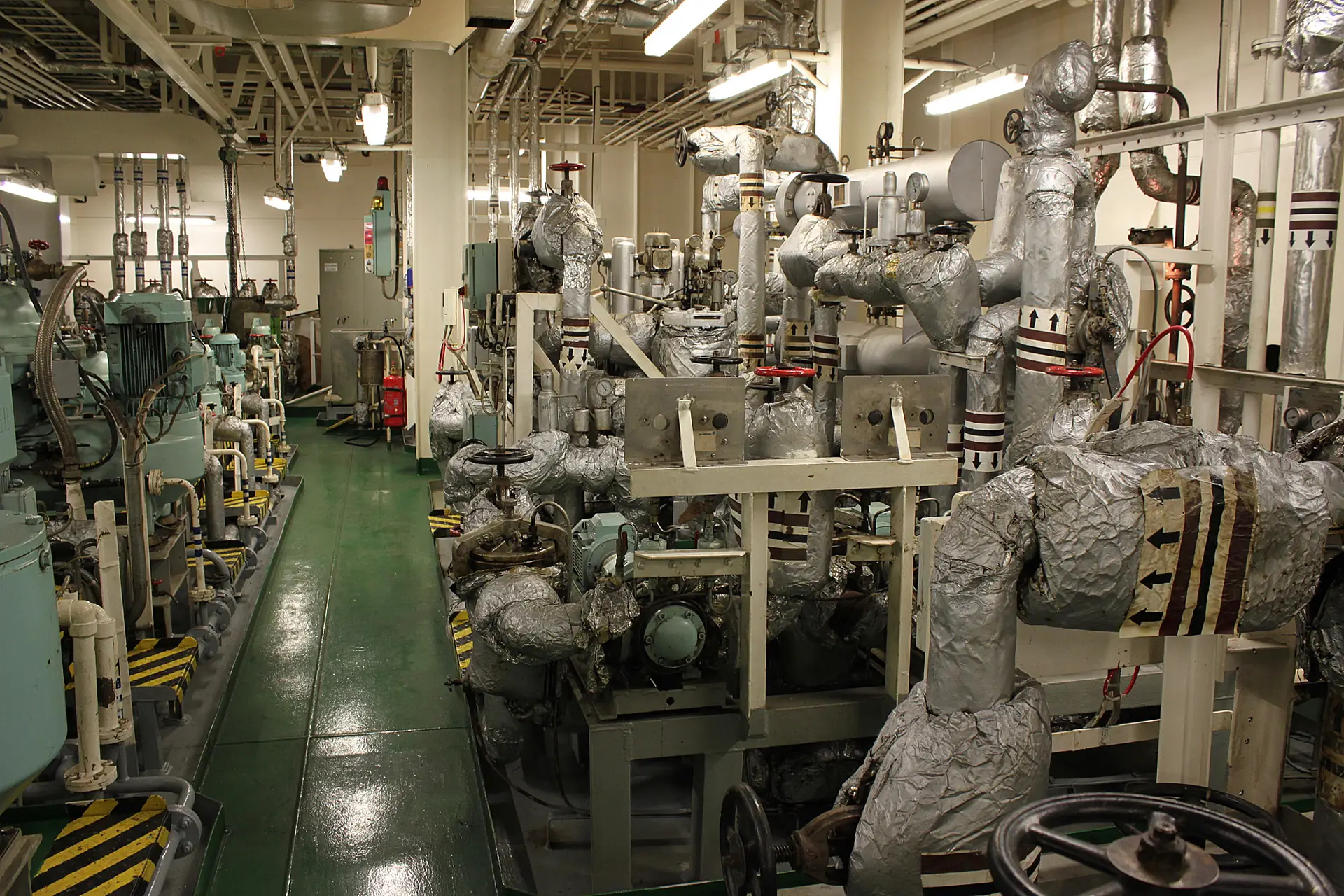
Rotary pump — general arrangement
A licensed photograph of Heishin equipment was not available at publication, so this technical reference illustrates the general arrangement shared by this equipment class.
Illustrative technical reference, not a photograph of Heishin equipment or a Vessel Core installed reference — a licensed photo of this maker's equipment was not available. Vessel Core has no dealership, distribution or partnership agreement with Heishin; it operates as an independent spare parts supplier.
Plate data that makes a Heishin enquiry quotable
The pump's own plate is the fastest route to a correct match. With the items below an enquiry can usually be priced in one pass; without them it comes back with a clarifying question first. How a plate photograph becomes a priced list is set out on the how we work page.
- Full code exactly as stamped, letters and size figure together (e.g. NE20, not just NE)
- Suffix, where present — CY-F-MN, NHL-F, NHL-G and similar suffixes name a separate execution
- Pump serial number
- Duty and medium handled — general transfer, sludge, bilge or waste oil
- Stator material, where known — Heishin lists NBR, EPDM, FKM, FFKM, VMQ and AU among its stator options — and the rotor material if the plate or data sheet gives it
- Photograph of the pump plate and of the part being requested
Tools for this equipment: the mechanical seal material code for the seal faces and the flange identifier for the suction and discharge flanges.
Supply route review for Heishin pump equipment.
Codes that sit one letter apart, suffixes that name a separate execution, and a rotary range sold alongside a mechanically different progressing-cavity range under the same maker name — the full code, the suffix and the duty get settled before anything else.
Full code read before quoting
Several Heishin codes share most of their letters, so a request is read against the complete code and size figure from the plate rather than the leading letters alone.
Neighbouring codes kept distinct
CY and CY-F-MN, and NHL-F and NHL-G, are listed by the maker as separate models, and a code that only looks like a current one is not assumed to be it — treating neighbouring codes as interchangeable is the most common way a part gets mismatched.
Suffix confirmed, not dropped
CY-F-MN and similar suffixes name a separate execution rather than a variant of the same pump, and a suffix dropped in transcription is the most common reason a quotation has to be reopened.
Elastomer compound confirmed on N-series
On the progressing-cavity ranges, the medium handled and the stator compound — not the pump size — usually set the replacement interval, so both are confirmed before a rotor or stator is quoted.
Rotary & progressing-cavity kept apart
The Tornado rotary lobe pump and the Mohno progressing-cavity pumps are mechanically different pumps under one maker name — and the CY is a Mohno pump, not a rotary one — so the wear parts list follows the pump type, not the maker name alone.
Estonian company, registered in Tallinn
Vessel Core OÜ trades from Tallinn as an Estonian company, Reg. 17028043, VAT EE102773714. A pump component typically travels as hand-carry with a joining engineer; larger overhaul kits are crated. Supply route, handover option and documentation are confirmed in the quotation.
Heishin pump parts — questions from the engine room
Which Heishin pump codes come up most often in spare-parts requests?
Heishin's own lineup is the safest reference. NE, NY/NYT and NYS are the general-purpose Mohno pumps — the first Heishin pump, an NE20 delivered in 1969, was a ship sludge pump — NHL, NVL and NTH are the hygienic series, CY and 2NL the small-capacity pumps, and the Tornado is the rotary lobe pump for sludge. A plate carrying a code outside that list can still be worked: send the full code with the size figure and suffix exactly as stamped, and the serial, before a parts list is worked up.
Why is it easy to send the wrong Heishin code?
Because several Heishin codes differ only by a suffix that names a separate pump: CY and its magnetic-coupling execution CY-F-MN, or NHL-F and NHL-G, are listed by the maker as separate models. A Mohno pump and a Tornado rotary lobe pump can also be confused when the plate is read only as Heishin. Copying the code exactly as stamped, letters, size figure and suffix included, avoids all of these.
Can a Heishin pump be identified without a part number?
Often yes. The full code as stamped on the plate, together with the size figure and the pump serial, narrows an enquiry a long way. On the progressing-cavity N-series, the medium handled and the elastomer stator compound are also worth sending, since the compound — not the pump size — usually sets the replacement interval.
What should a Heishin pump spare-parts RFQ contain?
A workable request lists the full code exactly as stamped, the size figure, and the pump serial number. For progressing-cavity units, add the medium handled and the elastomer stator compound where known. A photograph of the pump plate and of the part being requested settles most of the remaining questions in one pass.
Is Vessel Core connected to Heishin?
No, and there is no agreement of any kind. Vessel Core holds no dealership, distribution, representation or partnership agreement with Heishin, and quoting a component against one of its designations implies no approval by the maker and no claim of interchangeability.
Send the pump plate and the strip-down list.
Send the full code exactly as stamped, the size figure, and the pump serial. For progressing-cavity units, add the medium handled and the elastomer stator compound if known. We work back from that evidence to the correct parts list before a quotation is prepared.
