
Shin Shin Marine Pump
Spare Parts Supplier
Letter-coded pump ranges met on Korean-built tonnage — VID/VIB · SV · VF/MLO · EHS/EHC/SHC
Shin Shin pump codes seen in engine-room enquiries
Shin Shin's pumps recur on Korean-built tonnage, and the maker is read from its letter codes rather than a single model line. Shin Shin Machinery, founded in Busan in 1969, builds centrifugal pumps and rotary gear and screw pumps, and its own brochure ties each letter code to a construction and a duty: SVS, SVF and VF are fire and general-service pumps, MLO is the tank-mounted main lubricating-oil pump, and EHC, SHC and the self-priming EHS are horizontal pumps on jacket-cooling, hot-water and fresh-water service. Several codes sit a single letter apart, so the code, its suffix and the pump serial are what actually identify the build.
VID · VIB
VID and VIB are met in enquiries but do not appear in Shin Shin's current product brochure, where the vertical main cooling sea-water, fresh-water cooling and ballast pumps are coded MSS, MSC, MDS and MDC. A VID or VIB plate is therefore read together with the pump serial and a photograph before anything is matched; the wear scope is the impeller, the wear-ring pair, the mechanical seal, the shaft with its sleeve and the bearings.
SVF 150 · SVS-100 · SVS-150
Shin Shin's brochure gives SVS and SVF the same description — vertical, two-stage, single-suction and self-priming, for fire and general service and as the emergency fire pump — so the duty cannot tell them apart and the third letter is copied exactly from the plate. Impellers for both stages, wear rings, mechanical seal, shaft sleeve and casing gasket are the recurring lines.
VF 125 · MLO 200A1
VF is Shin Shin's vertical single-stage fire, bilge and general-service pump, also used as the emergency fire pump, built with single or double suction; MLO is a different machine altogether — the tank-mounted main lubricating-oil pump. The suffix after the size separates executions, so a request written from the first three characters narrows to a family rather than to a part.
EHS 50B · EHC 40A · SHC 40A
Three codes a letter apart that are frequently mixed up in transcription, yet not the same machine: EHS is a self-priming horizontal pump, used for example on main-engine air-cooler chemical cleaning and grey water, while EHC and SHC are plain horizontal single-stage pumps on jacket cooling fresh water, hot-water circulation and fresh water. Send a photograph of the plate with the request; the parts asked for are the impeller, the seal, bearings, shaft components and the gasket set.
Reading a Shin Shin code
The letters name the construction — vertical or horizontal, single- or two-stage, self-priming or not, tank-mounted — and Shin Shin's brochure assigns each construction to typical duties, but the code carries no capacity, and the figures and suffix after the letters separate builds within it. That is why the pump serial and the system it serves are worth sending with it — the same code covers builds with different seal and material executions.
Where a Shin Shin pump enquiry actually gets stuck
Most enquiries that reach us on this equipment trace back to a code that carries less information than it looks like it does. EHS, EHC and SHC differ by one letter and are frequently confused, although EHS is self-priming and the other two are not; SVS and SVF share one description and one duty in the maker's brochure, so only the stamped letter tells them apart; and a suffix after the size separates executions, so the first three characters alone only narrow an enquiry to a family. Because the code itself states no capacity and no duty, the pump serial and the system it serves are what actually confirm the build.
- Impellers
- Wear-ring pairs
- Mechanical seals
- Shaft sleeves & shaft components
- Bearings
- Casing gaskets
- Complete overhaul kits by code and serial
The same code can cover builds with different seal and material executions, so the pump serial number and the system it serves are what actually narrow the list to the right parts — the code by itself is a starting point, not the full identity.
Centrifugal pump — general arrangement
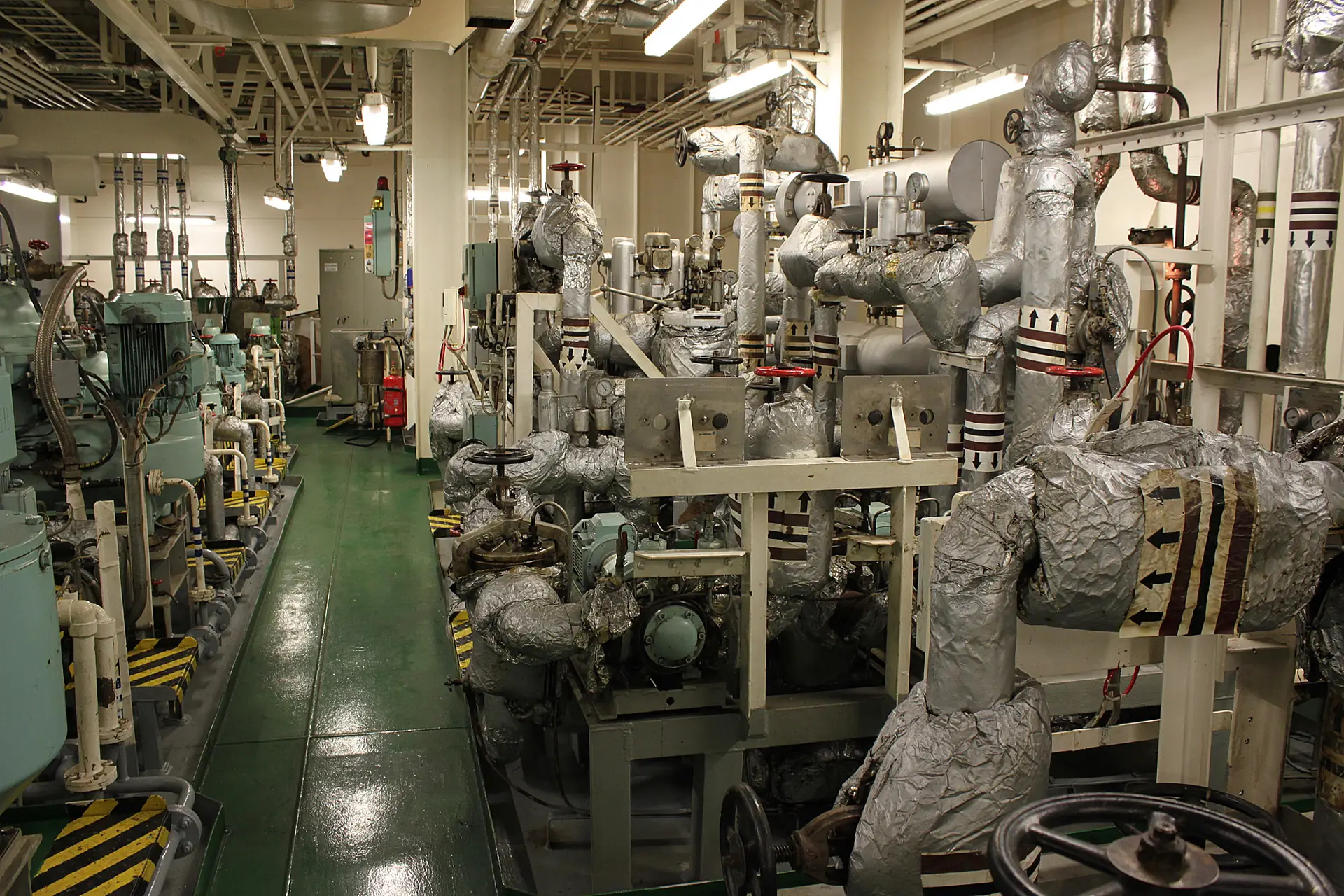
A licensed photograph of Shin Shin equipment was not available at publication, so this technical reference illustrates the general arrangement shared by this equipment class.
Illustrative technical reference, not a photograph of Shin Shin equipment or a Vessel Core installed reference — a licensed photo of this maker's equipment was not available. Vessel Core has no dealership, distribution or partnership agreement with Shin Shin; it operates as an independent spare parts supplier.
Plate data that makes a Shin Shin enquiry quotable
The pump's own plate is the surest route to a correct match. With the items below an enquiry can usually be priced in one pass; without them it comes back with a clarifying question first. How a plate photograph becomes a priced list is set out on the how we work page.
- Full code exactly as stamped, including any hyphen or suffix (e.g. SVS-100, not just SVS)
- Pump serial number
- Duty as named on the ship's pump list — fire & G/S, emergency fire, main L.O., jacket cooling F.W. — which cross-checks the code, since Shin Shin's brochure ties each code to particular duties
- Suffix, where present — a letter-and-figure suffix, such as the one on MLO, names a separate execution
- Photograph of the pump plate and of the part being requested
Tools for this equipment: the mechanical seal material code for the seal faces, the flange identifier for the suction and discharge flanges, and the affinity laws calculator when a centrifugal pump runs on another supply frequency. On fire and general-service duty, the nozzle K-factor calculator relates the pressure at a nozzle to its flow through the K-factor on the nozzle data sheet.
Supply route review for Shin Shin pump equipment.
A code that states no capacity and no duty, letters that differ by one character, and punctuation that is not consistent across the same pump's own parts lists — the full code, the suffix and the pump serial get settled before anything else.
Full code read before quoting
A code trimmed to its first three characters names a family, not a pump, so a request is read against the complete code and size figure from the plate.
One-letter codes kept distinct
EHS, EHC and SHC differ by a single letter and are frequently confused in transcription — treating them as interchangeable is the most common way a part gets mismatched.
Hyphenation not treated as identity
The SV codes appear both with and without a hyphen before the size on lists for the same pump, so punctuation is never read as the difference between two builds.
Suffix confirmed before quoting
A letter-and-figure suffix, such as the one MLO carries after its size figure, separates one execution from another, and a request read from the leading characters alone risks the wrong one.
Pump serial requested alongside the code
Because the code alone states no capacity and no duty, the pump serial and the system it serves are asked for early, since the same code can cover builds with different seal and material executions.
Estonian company, registered in Tallinn
Vessel Core OÜ trades from Tallinn as an Estonian company, Reg. 17028043, VAT EE102773714. A pump component typically travels as hand-carry with a joining engineer; larger overhaul kits are crated. Supply route, handover option and documentation are confirmed in the quotation.
Shin Shin pump parts — questions from the engine room
Which Shin Shin pump codes come up most often in spare-parts requests?
VID and VIB lead, although neither appears in Shin Shin's current product brochure, so a plate photograph matters most for them. The fire and general-service codes SVF, SVS and VF follow, with MLO, the tank-mounted main lubricating-oil pump, and the horizontal EHS, EHC and SHC codes that differ by one letter and are frequently mixed up in transcription. Send the full code together with the size figure stamped after it before a parts list is worked up.
Why are Shin Shin codes easy to mix up in transcription?
EHS, EHC and SHC differ by one letter and are frequently confused; the SV codes are written both with and without a hyphen before the size on parts lists for the same pump; and MLO carries a letter-and-figure suffix after the size that separates executions. A request written from the first three characters alone narrows to a family rather than to a part.
Can a Shin Shin pump be identified without a part number?
Often yes. The code carries no capacity and no duty by itself — it is a family letter group followed by a connection size and, on many executions, a suffix — so the pump serial and the system it serves are worth sending with it. A photograph of the plate settles most of what the code alone cannot.
What should a Shin Shin pump spare-parts RFQ contain?
A workable request lists the full code exactly as stamped, the size or connection figure, the pump serial number and the system the pump serves, since the same code can cover builds with different seal and material executions. A photograph of the plate and of the part being requested settles most of the remaining questions in one pass.
Is Vessel Core connected to Shin Shin?
No, and there is no agreement of any kind. Vessel Core holds no dealership, distribution, representation or partnership agreement with Shin Shin, and quoting a component against one of its designations implies no approval by the maker and no claim of interchangeability.
Send the pump plate and the strip-down list.
Send the full code exactly as stamped, including any hyphen or suffix, the pump serial number and the system it serves. We work back from that evidence to the correct parts list before a quotation is prepared.
