
Boll & Kirch Filter
Spare Parts Supplier
Automatic backflushing filters and duplex · simplex strainers for fuel oil, lube oil and cooling water — BOLLFILTER Type 6.48/6.46 · 6.64 · 6.72
Boll & Kirch filter ranges seen in engine-room enquiries
Boll & Kirch Filterbau GmbH was founded in Cologne in 1950 as a workshop for marine-engine filtration, has been based in Kerpen since 1979, and supplies under the BOLLFILTER brand into fuel oil, lube oil and cooling-water duty, with filters the maker describes as recognised by the most important classification societies. The type number on the housing plate — not the pipe size and not the engine it feeds — is what decides which element, gasket and control part actually fits, and automatic and manual units on the same enquiry can carry entirely different parts lists.
Type 6.48 · 6.46
Continuous backflushing filters for engine lube oil; the maker lists cruise vessels, work boats and power plants among their uses. The flushing device is turned by a turbine wheel at the filter inlet, driven by the oil flow itself, so the unit needs no external energy source and no drive motor. Requests typically cover the wire-mesh candle elements, the turbine and flushing-device components, and the seal set for the housing.
Type 6.64 · 6.64 KSS
The maker's self-cleaning filter for the maritime industry, built for large quantities of fuel, lubricants, coolants and alkaline cleaners, with wire-mesh or star-pleated candles and compressed-air-assisted backflushing. The 6.64 KSS variant is listed by the maker for cooling lubricants in metal-machining plants, not for shipboard cooling water. Enquiries commonly reach us for the filter element, the differential-pressure transmitter and the control-unit items that trigger the backflush cycle.
Type 6.72
The standard automatic self-cleaning range for fuel-oil duty. Element sets, backflush valve components and the housing gasket kit are the usual scope on a fuel-oil filter overhaul.
Type 6.21 · 6.22
Automatic backflushing filters for small, continuous fuel-oil flows, aimed by the maker mainly at protecting diesel injection pumps and suited to installations where space is limited. The maker describes a multi-segment element cleaned one segment at a time by a rotating backflush unit, so element and control-part references stay type-specific rather than scaling down from the 6.72 range.
FILTRATOR Type 8.64 · 8.72
Low-pressure fuel-side units built specifically to hold back abrasive catalytic fines before they reach the injection system. Element condition and the housing's differential-pressure history are worth quoting alongside the type and serial when a set is being reordered.
Type 6.18 · aquaBoll BWT
Type 6.18 covers industrial and cooling-water backwashing duty; aquaBoll BWT sits ahead of a ballast-water treatment system as a pre-filter stage. Screen mesh rating and the duty water source belong in the enquiry for either.
Duplex Type 2.04.5
A two-chamber duplex filter with a cast housing and a plug changeover valve, listed by the maker for small flows of water, oil, fuel and chemical liquids; one chamber can be cleaned while the other stays in service. The 2.05.5 is the counterpart for larger flows, so the full type matters. The insert is either a basket or a star-pleated element, so state which one is fitted; it is reordered together with the changeover valve seal and the cover gasket.
Simplex Type 1.03.2
A single-chamber filter that the maker lists as its low-pressure simplex type, for lines where a changeover duplex arrangement is not fitted. It takes either a basket or a candle element, so state which one comes out; element, cover gasket and bolting are the recurring reference points on this type.
Where a Boll & Kirch filter installation actually causes trouble
Most enquiries that reach us on this equipment trace back to one of four things, and knowing which one narrows the parts list a long way before a photograph is even needed. A worn or seized backflush arm, a failing drive motor or a solenoid valve that will not open leaves the differential pressure climbing without the housing ever cleaning itself — the symptom is a rising pressure drop that the automatic cycle should be resetting on its own, and by the time it is noticed manually, the elements downstream are usually already loaded past their normal service point. A candle or screen element that has worn through, or a cover gasket that has hardened and started to weep, lets unfiltered fluid bypass the filtration stage entirely; on a fuel-oil circuit this is the direct path for catalytic fines to reach injection equipment, and neither failure is always visible without opening the housing. The automatic backflush cycle is triggered by a differential-pressure signal read by the control unit, and a transmitter reading incorrectly, or a control unit that has lost its calibration, either triggers backflushing too often or not often enough — both faults look, from the outside, like the same rising-pressure symptom as a mechanical backflush failure. Finally, the bowl, cover and connection O-rings on any filter housing harden and shrink with heat cycling and fluid exposure over time, and a weeping housing joint is usually the first external sign that the seal set is due.
- Candle filter elements & screen filter elements
- Wire-mesh basket strainer inserts (duplex & simplex)
- Backflush arm, rotor & drive gear assemblies
- Backflush drive motors
- Solenoid valves & backflush control valves
- Differential-pressure gauges & transmitters
- Electronic control-unit boards & sensors
- Housing bowl, cover & connection O-rings
- Cover gaskets & sealing sets
- Duplex changeover valve seals
- Condensate & drain valve items
- Housing bolting & cover clamps
- Complete service kits by type and serial
An automatic-unit overhaul and a manual-strainer service call for different lists — the items above are grouped loosely by which arrangement they belong to, but state the type from the housing plate and the correct scope follows from it.
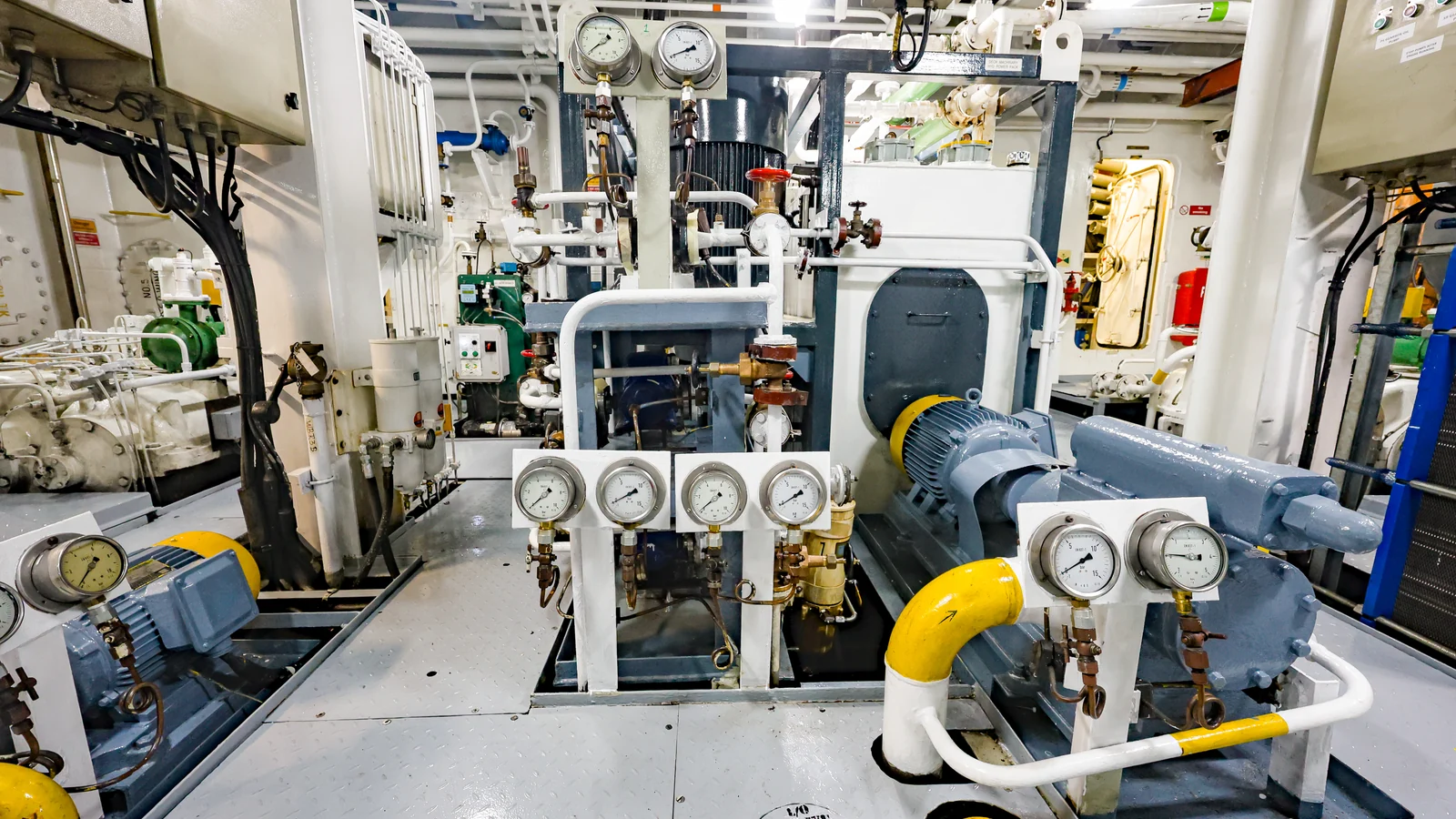
Automatic backflushing filter — general arrangement
A licensed photograph of Boll & Kirch equipment was not available at publication, so this technical reference illustrates the general arrangement shared by this equipment class.
Illustrative technical reference, not a photograph of Boll & Kirch equipment or a Vessel Core installed reference — a licensed photo of this maker's equipment was not available. Vessel Core has no dealership, distribution or partnership agreement with Boll & Kirch Filterbau GmbH or any other manufacturer named here; it operates as an independent spare parts supplier.
Housing-plate data that makes a Boll & Kirch enquiry quotable
The type plate sits on the filter housing and is usually the fastest route to a correct match. With the items below an enquiry can be priced in one pass; without them it usually comes back with a clarifying question first. How a plate photograph becomes a priced list is set out on the how we work page.
- Filter type exactly as stamped, e.g. 6.64 or 2.04.5
- Serial or works number from the housing plate
- Duty fluid — fuel oil, lube oil, cooling water or other
- Whether the unit is automatic (backflushing) or manual (duplex/simplex)
- Mesh or micron rating of the filter element
- Pipe connection size and flow-rate figure where known
- Seven-digit BOLL ID number from the element or the parts list, and the item number of the part on the drawing or parts list
- Whether the control unit, drive motor or transmitter is also required
- A previous order line quoting the same housing serial
- Photograph of the type plate and of the removed element
Tools for this equipment: the flange identifier for the pipe connections and the oil cleanliness code reader for an oil analysis report where the filter serves lube oil. Where a screen fineness is given as a mesh number, the mesh to micron converter turns it into the opening in microns. A beta ratio or a micron rating from the element data is read by the filter rating reader.
Supply route review for Boll & Kirch filtration equipment.
An automatic backflushing unit and a manual duplex strainer sharing a similar type-number format do not share a parts list. The housing type, the serial and the duty fluid get settled before anything else.
Element-level identification
Candle, screen and basket elements differ by micron rating, mounting and material between types and between build years, so enquiries are worked at element level rather than at type-number level alone.
Which route suits a fuel-critical filter
Where cat-fines protection ahead of injection equipment is at stake, the maker's own reference is usually the one to ask for. For cooling-water strainer baskets and gasket sets going into the ship's own store, a verified alternative route can be reviewed instead, subject to what the buyer's approval list allows.
Automatic and manual units read as separate scopes
A backflush drive motor and a duplex basket element do not belong on the same line of a parts list even when both filters sit in the same engine room. Each enquiry is read against the arrangement actually fitted, so a control-unit item does not get missed because the request only named the element.
Older housings, unreadable plates
A housing that has spent years in a damp engine room often has a plate that is painted over or partly corroded. Where the type will not read cleanly, the element itself — its dimensions, thread and mesh — is the next best evidence, and a rubbing or careful photograph usually settles it.
A blocked filter is not always a stopped engine
A cooling-water strainer running dirty is a different urgency from a fuel-oil automatic filter stuck mid-backflush ahead of the main engine. The list is read that way, so an urgent element-only scope can be split off from a full control-unit overhaul rather than waiting on one combined package.
Estonian company, registered in Tallinn
Vessel Core OÜ trades from Tallinn as an Estonian company, Reg. 17028043, VAT EE102773714. A filter element or gasket set typically travels as hand-carry with a joining engineer; larger service kits are crated. Supply route, handover option and documentation are confirmed in the quotation.
Boll & Kirch filter parts — questions from the engine room
Which Boll & Kirch filter types come up most often in engine-room RFQs?
The automatic backflushing ranges lead: Type 6.48/6.46 for continuous lube-oil filtration, Type 6.64 as the self-cleaning filter for the maritime industry, and Type 6.72 for standard fuel-oil self-cleaning duty. Manual Duplex Type 2.04.5 and Simplex Type 1.03.2 strainers are the other recurring reference points. Send the type exactly as stamped on the filter housing plate together with the serial number before a parts list is worked up.
Can a Boll & Kirch filter element be identified without a part number?
Often yes. The filter type, the serial number on the housing plate, the duty fluid — fuel oil, lube oil or cooling water — and the mesh or micron rating together narrow an enquiry a long way. The most direct reference is the seven-digit BOLL ID number, found on the element or in the filter's parts list; where it cannot be read, the maker itself identifies the part from the serial number on the housing type plate, so that number is worth sending in every case.
Does an automatic backflushing filter get reviewed differently from a manual duplex strainer?
Yes. An automatic unit's parts list runs through the backflush arm, drive motor or solenoid valve and the differential-pressure transmitter alongside the candle or screen element itself, while a manual duplex or simplex strainer's list is normally just the basket element, the cover gasket and the changeover handle seal. State which arrangement is fitted — automatic or manual — so the enquiry is worked against the right parts list from the start.
What should a Boll & Kirch filtration RFQ contain?
A workable request lists the filter type from the housing plate, the serial number, the duty fluid and pipe connection size, the mesh or micron rating, and — for an automatic unit — whether the backflush drive, control unit or differential-pressure transmitter is also needed. A photograph of the housing plate and of the removed element settles most of the remaining questions in one pass.
Differential pressure keeps climbing on an automatic filter. Is it the elements or the backflush?
From outside the two look the same. A worn or seized backflush arm, a failing drive motor or a solenoid valve that will not open leaves the pressure drop climbing without the housing cleaning itself. A differential-pressure transmitter reading incorrectly, or a control unit that has lost its calibration, triggers backflushing too often or not often enough and shows the same symptom. Say what has been checked, and whether the drive, the control unit or the transmitter is needed alongside the elements.
Can Boll & Kirch elements go on an alternative route?
It depends on what the filter protects. Where cat-fines protection ahead of injection equipment is at stake, the maker's own reference is usually the one to ask for. For cooling-water strainer baskets and gasket sets going into the ship's own store, a verified alternative route can be reviewed instead, subject to what your approval list allows.
Is Vessel Core connected to Boll & Kirch?
No, and there is no agreement of any kind. Vessel Core holds no dealership, distribution, representation or partnership agreement with Boll & Kirch, and quoting a component against one of its designations implies no approval by the maker and no claim of interchangeability.
Send the housing plate — the parts list follows from it.
Send the filter type (for example 6.64 or 2.04.5), the serial number from the housing plate, the duty fluid, and whether the arrangement is automatic or manual. Each line is then read back against the type it belongs to before an element, gasket or control-part reference is fixed against it.
