
Damcos Valve Remote
Control Spare Parts
LPU power units - BRC & BRCF actuators - control cabinets
The Damcos equipment behind most valve remote control enquiries
Damcos is a Danish valve remote control brand, now part of Emerson, and has been established in marine Valve Remote Control Systems for a long time. What arrives as a single complaint from the ship is rarely a single machine. A valve remote control system is built in three layers that fail differently and carry entirely different spare parts: an electro-hydraulic power unit that makes and holds the pressure, hydraulic actuators mounted on the valves themselves, and a control cabinet through which commands go out and position feedback comes back. Naming the layer is what turns a complaint into a quotable line.
LPU-S, LPU-D and LPU Plus local power units
The LPU series are the electro-hydraulic power units of a Damcos valve remote control system: the layer that generates hydraulic pressure and holds it available for the actuators it serves. State which execution is on board, because the pump, motor, solenoid and manifold parts inside follow the execution rather than the vessel type.
BRC hydraulic actuators
BRC actuators sit on the valve itself and turn hydraulic pressure from the power unit into valve movement. This is the layer opened most often on board, and the layer where seal kits and rebuild kits are the usual first line on an enquiry.
BRCF hydraulic actuators
The BRCF range covers the same job in a different execution. Read the series marking off the actuator body before a kit is described, since the kit is matched to the actuator series rather than to the size of the valve underneath it.
BRCF HT high-torque execution
Where a valve asks for more torque than the standard execution provides, the high-torque BRCF HT variant is the one fitted. Because HT is a distinct build, it is worth reading the marking rather than assuming the standard variant when the request is written.
Damcos control cabinets
The cabinet is where valve commands originate and where position feedback arrives. Cards and interface modules inside it are replaceable items, and a fault on this side can look identical, on the mimic panel, to a fault out at the valve.
Valve remote control systems
Power unit, actuators and cabinet together form the Valve Remote Control System. Documented duty covers ballast valves, cargo valves, hatch covers, steering gear and bilge systems on tankers, bulk carriers, LNG carriers and cruise ships.
How far the fault reaches decides which Damcos parts belong on the list
One power unit serves many actuators. That single architectural fact does more to shape a Damcos enquiry than any part description, because it means the same symptom on the bridge or in the cargo control room can point at two completely different parts lists. If every valve fed by one LPU has gone slow, weak or dead together, the question sits at the power unit and its distribution: the pump and motor components inside the unit, the hydraulic filters, the hoses in the pressure and return lines, and the solenoid valves and manifold parts that direct pressure onward. If one valve is affected while its neighbours on the same unit still answer normally, the question has moved out to that valve: its actuator, its seals, its position feedback, and the manifold section serving it.
Asking the ship which of those two pictures matches is not a formality. It is the difference between an enquiry for an actuator seal kit and an enquiry for power unit internals, and the two lists share almost nothing. It is worth recording in the request even when the answer is uncertain, because "we have not yet tried the other valves on this unit" is itself useful information for the technical review that follows.
The second thing worth separating is movement from reporting. A valve that moves correctly but shows the wrong state on the mimic is a feedback and cabinet question rather than an actuator question, and the parts categories differ accordingly: actuator position feedback components on one side, control cabinet cards and interface modules on the other. Both are replaceable items, and both are worth raising as their own lines rather than folded into a general request to make the valve work again.
The third is the choice between rebuilding and replacing. Hydraulic actuator seal kits and rebuild kits are the routine consumable for this equipment class, but a complete replacement actuator is the sensible line where a rebuild is not economical for that particular unit. Neither route should be assumed on the ship's behalf. Where both are listed on the same enquiry, the vessel can weigh the two against its own docking plan and decide what to open now and what to carry as a running spare.
Damcos components that appear on RFQ lines
The groups below follow the layers of the system, from the valve outward: what is fitted on the actuator, what sits inside the power unit, and what is replaced in the cabinet. Keeping them in that order lets each RFQ line carry the valve tag and the system reference beside the description.
- Hydraulic actuator seal kits for BRC and BRCF units
- Actuator rebuild kits, including the BRCF HT execution
- Complete replacement actuators where a rebuild is not economical
- Actuator position feedback components
- Solenoid valves within the power unit
- Hydraulic manifold parts within the power unit
- LPU pump components
- LPU motor components
- Hydraulic filter elements in the pressure and return lines
- Hydraulic hose assemblies between power unit and actuators
- Control cabinet cards
- Control cabinet interface modules
- Mixed lists covering a whole ballast or cargo valve system
Marine globe valve — general arrangement
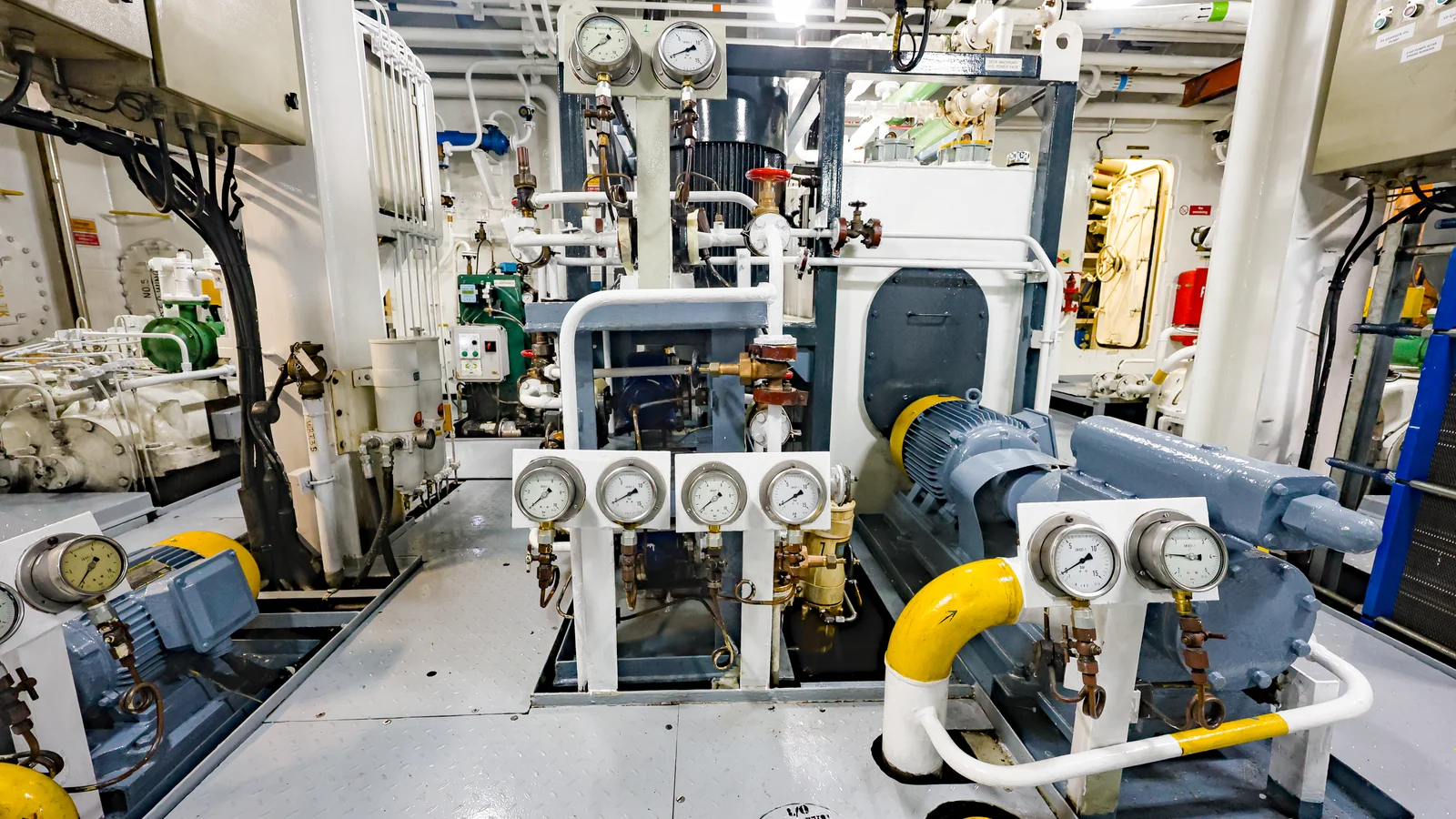
A licensed photograph of Damcos equipment was not available at publication, so this technical reference illustrates the general arrangement shared by this equipment class.
Illustrative technical reference, not a photograph of Damcos equipment or a Vessel Core installed reference — a licensed photo of this maker's equipment was not available. Vessel Core has no dealership, distribution or partnership agreement with Damcos; it operates as an independent spare parts supplier.
Turning a valve tag into a quotable line
Damcos equipment is identified as much by where it sits as by what is stamped on it. An actuator is described by its series and execution, but it is located by the valve it drives and by the service that valve belongs to. Two actuators of the same family on the same vessel can sit on entirely different systems, so the enquiry needs both halves: the equipment marking and the position in the ship.
- Actuator series marking read from the unit: BRC, BRCF or BRCF HT
- Power unit execution: LPU-S, LPU-D or LPU Plus
- Valve tag number as it appears on the ship's system drawing
- Service the valve belongs to: ballast, cargo, bilge, hatch cover or steering gear
- Whether one valve or every valve on that power unit is affected
- Nameplate or equipment label photographed square-on
- Photographs of the actuator in place, including the mounting interface
- Photographs of the control cabinet fascia, and of any card that has been withdrawn
- Hydraulic schematic or system drawing page where one is on board
- Quantity, vessel or IMO, port and ETA
A hydraulic system asks more of an enquiry than a single valve does.
A valve on its own can be described in one line. A remotely controlled valve cannot, because the thing that stopped working may be several metres away from the thing that shows the fault. What follows is how that separation between command, pressure and movement changes the questions asked before any Damcos item is quoted.
System layer named first
Power unit, actuator or cabinet. The three layers carry different components, so the enquiry is routed by layer before any part is described. Where the layer is not yet known, that is said plainly rather than guessed at.
Actuator series before kit
BRC, BRCF and the high-torque BRCF HT are read off the unit rather than inferred from the valve. The series is what a seal or rebuild kit is matched against, so it is confirmed early in the exchange.
Rebuild and replacement quoted apart
A seal or rebuild kit and a complete replacement actuator are raised as separate lines. The vessel then weighs the two against its own plan instead of receiving one route chosen for it.
Feedback treated as its own question
A valve that moves but reports the wrong position points at position feedback components or at the cabinet side. Those lines are kept separate from actuator lines so the wrong layer is not rebuilt.
Power unit internals reviewed as a group
Where the whole line has weakened, LPU pump and motor components, solenoid valves, manifold parts, filters and hoses are looked at together, since they share one pressure circuit and one service history.
Cabinet parts identified from the module
Control cabinet cards and interface modules are described from the module itself and its position in the cabinet, with a photograph of the withdrawn card where one can be taken safely alongside the cabinet fascia.
Damcos valve remote control enquiries - recurring questions
Can Vessel Core quote Damcos actuator parts without a part number?
Often yes. The series marking read from the actuator body, the tag number of the valve it drives, the service that valve sits on, and photographs of the actuator in place and of the control cabinet fascia are usually enough to begin structuring the request. A page from the hydraulic system drawing removes most of the remaining ambiguity, and the actuator can then be described by family and execution rather than by a number nobody on board can find.
Which Damcos product families do these enquiries usually cover?
The LPU series of electro-hydraulic power units, including the LPU-S, LPU-D and LPU Plus executions; the BRC and BRCF hydraulic actuators, including the high-torque BRCF HT variant; and Damcos control cabinets. Together these form the valve remote control system, and a request usually names one layer of it even when the fault has not yet been isolated to that layer.
One ballast valve will not operate. Which parts should be on the enquiry?
It depends on how far the fault reaches. If every valve on the same power unit has gone slow or dead, the enquiry belongs at the power unit: LPU pump and motor components, hydraulic filters and hoses, and the solenoid and manifold parts inside it. If one valve alone is affected, the actuator seal kit, the rebuild kit, the position feedback components and the manifold section serving that valve are the lines worth raising. Saying which of the two situations is on board narrows the list before anything is quoted.
Is Vessel Core connected to Damcos or Emerson?
No. Damcos is a Danish valve remote control brand, now part of Emerson, and is named on this page only so that a buyer can match equipment already installed on board. Vessel Core operates as an independent marine spare parts supplier, quoting components on its own account. No dealer, distributor or partner appointment from Damcos or Emerson is associated with this page. Damcos parts are widely traded as marine spares by third-party marine hydraulic parts suppliers, and enquiries are handled on that basis.
Send the actuator marking and the valve tag.
List the actuator series, the power unit execution if it is known, the valve tag and the service it belongs to, whether one valve or the whole line is affected, the quantity and the port. Seal and rebuild kits, complete replacement actuators, power unit internals and cabinet modules are then quoted as separate lines, so the ship can decide what to open now and what to carry as a running spare.

