
Deif Marine Control
& Protection Parts
AGC-4 & AGC 150 · PPM 300 & PPU · Multi-line 2 · Delomatic
The Deif equipment behind most switchboard enquiries
Deif A/S is a Danish manufacturer of genset control, protection and power-management systems built into engine-room switchboards and machinery control rooms on merchant and offshore vessels. A single vessel can carry several Deif product families side by side: a standalone, non-synchronizing AGC 150 controller on an emergency generator, an AGC-4 or AGC-4 Mk II genset, mains, bus-tie or plant controller on the main switchboard, a PPM 300 or PPU-3/PPU 300 paralleling and protection unit inside a PLC-based power management system, a Multi-line 2 module set for standalone generator protection or paralleling, and a Delomatic-3 or Delomatic-4 platform coordinating synchronizing, load sharing, load reduction and shedding across the whole plant.
AGC-4 and AGC-4 Mk II
Genset, mains, bus-tie, group and plant controllers on the main switchboard. One hardware family covers several controller roles, so the role a unit fills on board belongs in the request beside the type designation.
AGC 150 standalone controller
The standalone, non-synchronizing member of the AGC range, typically seen on an emergency generator. Because it does not parallel, its spare scope differs from an AGC-4 on the main switchboard even where the panel cut-out looks the same.
PPM 300 genset controllers
PPM 300 genset controllers, including the PPM 300 Emergency marine and offshore variant. These are the units met inside a PLC-based power management system rather than on a standalone panel.
PPU-3 and PPU 300 units
Synchronizing and load-sharing units. On board they sit in the same paralleling and protection duty as PPM 300, which is why the designation read off the fascia decides the parts list rather than the function described over the phone.
Multi-line 2 GPU and GPC
Multi-line 2 in its Generator Protection Unit (GPU) and Generator Paralleling Controller (GPC) variants, fitted as a module set for standalone generator protection or paralleling.
Delomatic-3 and Delomatic-4
Platform modules coordinating synchronizing, load sharing, load reduction and shedding, and covering shaft-generator or DP-interface duty. What is usually needed is an individual card out of the cubicle rather than a complete controller.
MVR-200, MDR-2, GPU-3, MTR-4 and APU-4
Busbar, generator, motor, transformer and grid protection modules. Several of these often sit side by side in one switchboard, so a request naming only the vessel and the symptom rarely narrows to a single module.
RMC, RMP, RMQ, RMV and LMR-1xx
Single-function current, power, loss-of-excitation, loss-of-mains, voltage and frequency relays, handled alongside genset controller and power-management requests rather than as a separate enquiry.
Deif equipment groups that appear on RFQ lines
Supply coverage follows how Deif equipment is actually built into a switchboard: genset controllers, paralleling and protection units, plant-wide power management, protection relays, and the individual cards and modules that get replaced inside them.
- AGC-4 and AGC-4 Mk II genset, mains, bus-tie, group and plant controllers
- AGC 150 standalone, non-synchronizing controllers
- PPM 300 genset controllers, including the PPM 300 Emergency marine and offshore variant
- PPU-3 and PPU 300 synchronizing and load-sharing units
- Multi-line 2 Generator Protection Unit (GPU) modules
- Multi-line 2 Generator Paralleling Controller (GPC) modules
- Delomatic-3 and Delomatic-4 power management modules
- Delomatic spare cards - SCM, CRM-1, OPM-1, PSM-1, IOM-4 and PCM-4
- Sync/control, output, power-supply and I/O modules from a Delomatic cubicle
- Shaft-generator and DP-interface module scope on Delomatic plants
- MVR-200, MDR-2, GPU-3, MTR-4 and APU-4 busbar, generator, motor, transformer and grid protection modules
- RMC, RMP, RMQ, RMV and LMR-1xx current, power, loss-of-excitation, loss-of-mains, voltage and frequency relays
- Display and HMI units sold separately from the base logic unit
- Power-supply modules for controller and relay racks
- Wiring looms and panel interconnection sets
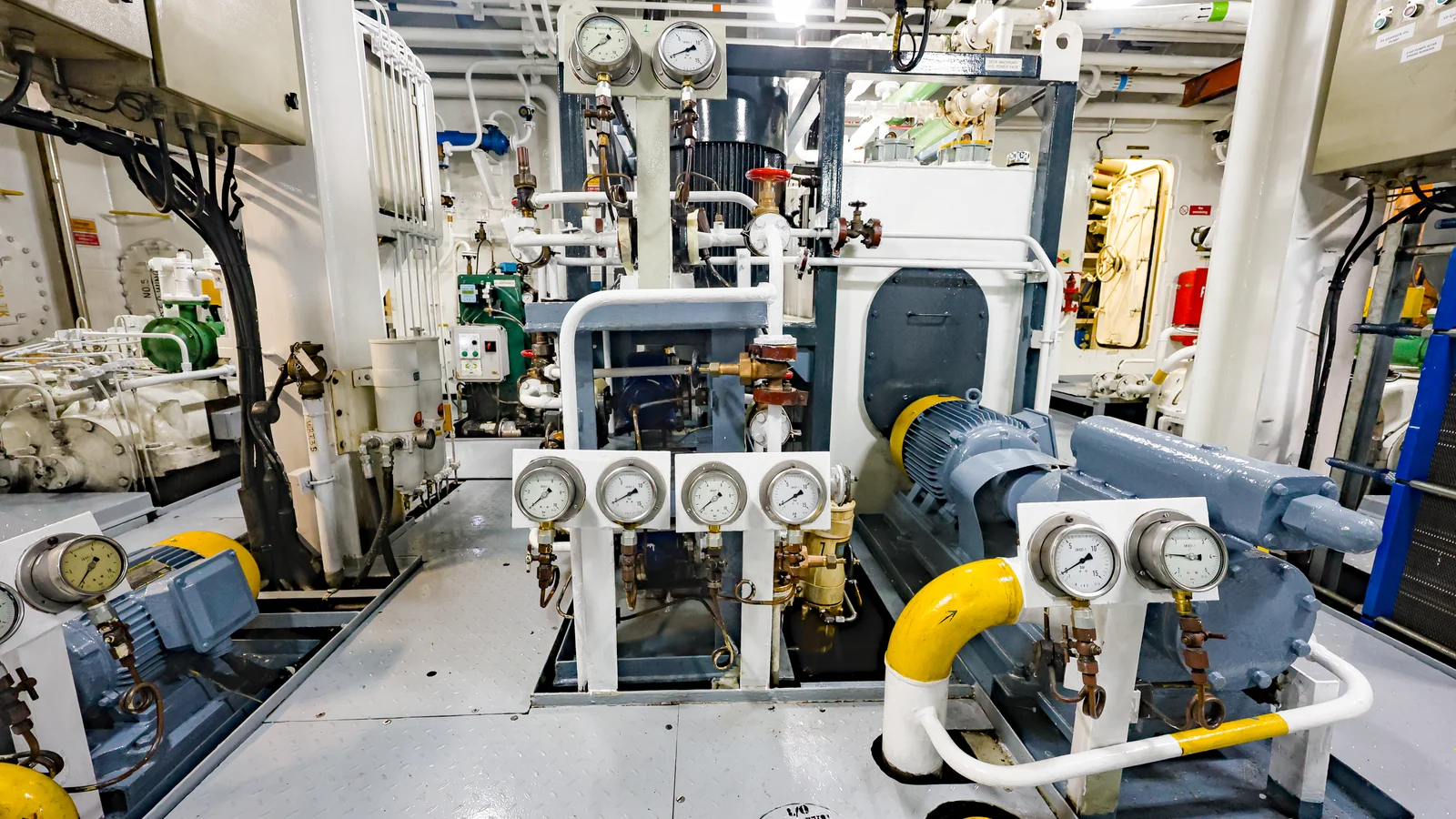
Genset control panel — general arrangement
A licensed photograph of DEIF equipment was not available at publication, so this technical reference illustrates the general arrangement shared by this equipment class.
Illustrative technical reference, not a photograph of DEIF equipment or a Vessel Core installed reference — a licensed photo was not available. Vessel Core has no dealership, distribution or partnership agreement with the manufacturer named; it operates as an independent spare parts supplier.
Turning a Deif type designation into a quotable line
Part numbers are helpful but not always available once a controller has been on board for years. A rating-label photo, a picture of the open cubicle showing the card layout, or the type designation read from the display can be enough to begin cross-checking before a supply route is proposed.
- Controller or relay type - AGC-4, AGC 150, PPM 300, PPU-3/300, Delomatic-3/4, Multi-line 2, RM-series
- Order or item number where shown on the label
- System served - main generator, emergency generator, bus-tie or shore connection
- Firmware or software version where the display shows one
- Front panel and fascia type designation photographed square-on
- Rating label photographed close enough to read every character
- Card or module designation where the unit is already open
- Card edge and connector photographed on a Delomatic module
- Terminal labelling and the wiring drawing for the cubicle
- Card or part description and the quantity required
- OEM route, verified alternative route, or both
- Vessel name or IMO number and the company name
- Urgency level, port and ETA
- Excel list where several lines are requested together
A control-system enquiry asks different questions than a mechanical one.
Because these product families overlap in function but differ in hardware, an RFQ line needs the type designation before it can be turned into a quotable part. A worn output card pulled from a Delomatic cubicle and a faulted PPM 300 controller can both present on board as "the generator will not synchronise," yet the spare parts involved have nothing in common. Photographs of the front panel, the rating label, and, where the unit is opened, the card or module designation are usually enough to start narrowing the request even before a full order number is on hand.
Type designation before part number
Deif families overlap in function but differ in hardware, so the designation read from the fascia, the display or the label is confirmed first. Only then can a line be turned into a quotable part rather than a description of a symptom.
Identification at module level
Type designation, order or item number, rating label and the firmware or software version are collected together, because a controller that has been in service for years often no longer carries a legible part number of its own.
The system served is part of the spec
Whether the unit sits on the main generator, the emergency generator, a bus-tie or a shore connection is asked early. One family covers several roles, and the role on board narrows the request faster than the model name alone.
Several relay types in one switchboard
The same switchboard often carries several relay types side by side, so protection relay enquiries are checked against the panel layout before a single module is named. Relay requests are handled alongside controller and power-management lines.
Display and logic unit treated apart
Display and HMI units are sold separately from the base logic unit, so a request written as "a new controller" is checked against what actually failed. A dead screen and a dead logic unit are not the same order.
OEM route and verified alternatives
An OEM route or a verified alternative route can be reviewed where appropriate. Request context is structured before supplier routing or quotation work, so the commercial request reaches suppliers in a form that returns a clearer reply.
Deif control parts enquiries - recurring questions
Can Vessel Core quote Deif genset control parts without a part number?
Often yes. Photos of the rating label, the controller type designation shown on the display or fascia, the panel or cubicle it sits in, and the card or module reference where the unit is open are usually enough to begin structuring the RFQ before a full order number is available.
What information is needed for an AGC-4 or Delomatic parts enquiry?
The type designation (AGC-4, AGC-4 Mk II, AGC 150, Delomatic-3 or Delomatic-4), the order or item number if shown on the label, the system it serves on board such as the main generator, emergency generator, bus-tie or shore connection, the firmware or software version where the display shows one, and photos of the front panel and terminal labelling.
Can a Delomatic spare card be identified from a photo alone?
Often yes. The card designation printed on the module, for example SCM, CRM-1, OPM-1, PSM-1, IOM-4 or PCM-4, together with the Delomatic system generation and a photo of the card edge and connector, is usually enough to begin identification. The full order number narrows it further where one is visible.
Does Vessel Core supply Deif protection relays as well as genset controllers?
Yes. Enquiries covering the Multi-line 2 GPU and GPC range, MVR-200, MDR-2, GPU-3, MTR-4, APU-4 and the single-function RMC, RMP, RMQ, RMV and LMR-1xx relays are handled alongside genset controller and power-management requests, since the same switchboard often carries several relay types side by side.
Send the type designation and the panel photographs.
List the controller or relay type, the order or item number if shown, the system it serves and the port. Genset controllers, protection relays, power-management modules and Delomatic spare cards are then quoted as separate lines, so the ship can decide what to open now and what to carry as a running spare.

